How to be rich and happy

Share

Please don’t make the mistake I made.

When I was young, I wanted to be a writer. That was my dream. I loved reading and the feel and smell of books. I haunted libraries and bookstores, imagining my own books in the windows and on the shelves.

I was a voracious reader. Non-fiction and fiction. Business, marketing, biographies, history; mysteries, thrillers, detective novels, science fiction. And books on writing.

But while I have written extensively throughout my career, early on, I somehow convinced myself that writers don’t make much money and I needed to do something more remunerative. Make money first, then I can retire and write all I want.

I now know this is folly.

To deny your passions, no matter the financial ramifications, is to deny the truth of who you really are. Working to make money so you can then do something else is simply bad advice.

But what if what you are passionate about is a one way ticket to financial mediocrity? At some point, you have to ask yourself, “What’s more important, money or happiness?” Yes, money is important and having more of it gives you more options. But having money does not guarantee happiness. Legions of unhappy wealthy people attest to that.

How about asking a different question: “What if what you are passionate about can lead to wealth and happiness?” It can, you know. In fact, I believe that following your passion is a much better road map to prosperity than working for money.

I’ve accomplished a lot in my career. I’ve done well financially.  And now, decades after my childhood passion first stirred in me, I am writing. This blog is just the tip of the iceberg.

How does it feel? It feels. . . right. I can’t describe what I feel as excitement, it’s more a feeling of serenity, of “this is who I am and where I belong”.

But I also have flashes of regret.

What if I had listened to my inner child, the one who wanted to be a writer? What if I had ignored the voice of “logic” that told me to do something else? Where might I be today?

I don’t know if I’d be rich, but I know I’d be happy.

If I’d read the story of “The Rich Fisherman,” I might be in a different place today:

There was once a businessman who was sitting by the beach in a small Brazilian village. As he sat, he saw a Brazilian fisherman rowing a small boat towards the shore having caught quite few big fish. The businessman was impressed and asked the fisherman, “How long does it take you to catch so many fish?”

The fisherman replied, “Oh, just a short while.”

“Then why don’t you stay longer at sea and catch even more?” The businessman was astonished.

“This is enough to feed my whole family,” the fisherman said.

The businessman then asked, “So, what do you do for the rest of the day?”

The fisherman replied, “Well, I usually wake up early in the morning, go out to sea and catch a few fish, then go back and play with my kids. In the afternoon, I take a nap with my wife, and evening comes, I join my buddies in the village for a drink — we play guitar, sing and dance throughout the night.”

The businessman offered a suggestion to the fisherman. “I am a PhD in business management. I could help you to become a more successful person. From now on, you should spend more time at sea and try to catch as many fish as possible. When you have saved enough money, you could buy a bigger boat and catch even more fish. Soon you will be able to afford to buy more boats, set up your own company, your own production plant for canned food and distribution network. By then, you will have moved out of this village and to Sao Paulo, where you can set up HQ to manage your other branches.”

The fisherman continued, “And after that?”

The businessman laughed heartily, “After that, you can live like a king in your own house, and when the time is right, you can go public and float your shares in the Stock Exchange, and you will be rich.”

The fisherman asked, “And after that?”

The businessman said, “After that, you can finally retire, you can move to a house by the fishing village, wake up early in the morning, catch a few fish, then return home to play with kids, have a nice afternoon nap with your wife, and when evening comes, you can join your buddies for a drink, play the guitar, and sing and dance throughout the night!”

The fisherman was puzzled, “Isn’t that what I am doing now?”

Share

Every law firm must manage only these three things

Share

John Jantsch’s post today is about the three things every business must manage: Purpose, Projects, and Process:

  • Purpose: create and tell the story about why the business does what it does.
  • Projects: create actions steps and assemble resources to fulfill the business purpose.
  • Process: implement the action steps.

These three functions obviously apply to every attorney and law firm. However, while we all need to manage purpose, projects, and process, we’re not all in the same business (practice area).

A few years ago, I wrote a post, “The Three Things That Matter Most,” about finding and focusing on the essence of what you do. The three things that matter most for you are the “twenty percent” activities that deliver eighty percent of your (desired) results. When you focus on these three things, you can eliminate (delegate) or curtail everything else, freeing you to do more of your “twenty percent” activities, getting more results.

If you want to earn more and work less, you must focus on the things that matter most. Therefore, once you know and are prepared to articulate your purpose, take the time to reflect on what matters most in your practice before you create any projects or engage in the process of fulfilling that purpose.

Share

If you’d like to “Crush It!”

Share

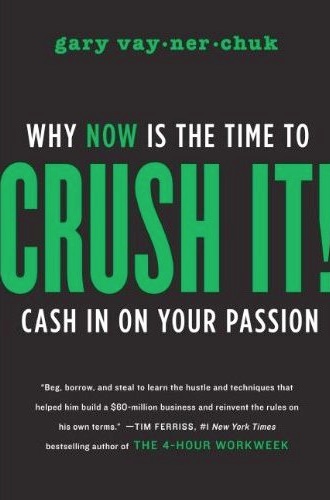
I wrote this brief review of “Crush It!” by Gary Vaynerchuck on another blog more than a year ago. My knowledge and use of social media has come a long way since then. I’ll post reviews of other books I’ve read that have more of the “how to’s” but this is the book to read if you want to know “why to”.

—

I’d heard a lot of good things about “Crush It!” and finally downloaded it (kindle for PC, in case you’re curious). I’m fairly new to the world of social media marketing so I was surprised at how much I already knew and how much I was already doing.

After reading Crush It!, I now know (a) social media marketing is not a passing fad, (b) properly implemented, it’s an incredibly powerful way to build almost any kind of business, and (c) it’s not that complicated. In other words, if you market something on the Internet, or you want to, you need to add social media marketing to your marketing mix and it’s a lot easier than you may have thought.

Now, if you’re looking for a detailed manifesto on social media marketing, this isn’t it. It’s a great story and a compelling look at the power of social media marketing and worth it for that alone. Where it really shines, however, is in driving home the importance of finding your passion, your DNA as Vaynerchuk calls it, and building your brand, and your business, around that.

Vaynerchuk makes you think about who you are and what drives you. If you’re going to “crush” anything, it’s going to have to be something you are passionate about, or you won’t do it enough, or well enough, to cut through the noise and clutter that competes for the eyes and ears of your target market. If you don’t enjoy what you’re doing, you aren’t going to make it; if you do, the journey will be as rewarding as the destination.

A friend of mine often says, “if you do what you love and you love what you do, you’ll never work another day in your life.”  No doubt Gary Vaynerchuk would agree.

Share

Create a (free) social media web page about you with about.me

Share

A social media hub page is a virtual business card: a single web page with a brief bio (or link thereto) and links to your websites, blog, Facebook, Twitter, and other social media accounts. This allows you to provide a single link in your email signature, your (paper) business card, in an article byline, and anywhere else your name appears in print or online. A single link is clean and professional looking, one reason why virtual business cards are becoming more popular.

I’ve experimented with different options. Recently, I set up an account with about.me. My page was easy to set up and customize. I uploaded a background image (me, looking fierce) but did not include a bio. Instead, I listed my professional roles as attorney, writer, and entrepreneur.

If you click on the doo-hickey at the top of the page, it will take you to a random assortment of other about.me pages, many of which are quite creative. Great for ideas.

About.me is integrated with Klout, a new social media “rating” service that tells you how influential you are in the online world. It also tells you who you influence and who influences you. I’m not sure how useful this is but it’s interesting to watch my klout index increase.

I also set up an account with flavors.me, which allowed me to create an almost identical page. They have a paid version ($20/yr.) with added customization features. Attorney Dan Gold set up a page on flavors.me and took advantage of those upgraded features.

About.me is free; I couldn’t find a paid version. I’d like to see more options for configuring pages, like the paid version of Flavors.me seems to provide, but all in all, this is a great way to quickly set up a virtual business card. Give it (or flavors.me) a try. Send me a link to your page and I’ll feature it in a future blog post.

Share

You’re not thinking big enough. Or are you?

Share

We’ve all heard interviews of massively successful entrepreneurs who say they had no idea their idea or business would grow as big as it has or go in the direction it did. They simply followed their passion and, like Alice chasing the rabbit, one day found themselves in Wonderland.

There is another group of entrepreneurs (professionals, artists, athletes, etc.), undoubtedly a smaller group, who right from the start of their business or career, had big dreams and plans for their future. “I knew right from the beginning where I wanted to take this business,” they say.

Which one are you?

Are you putting one foot in front of the other and seeing where it takes you or do you know exactly where you want to go?

John Jantsch, over at Duct Tape Marketing, says that thinking small rarely leads to greatness and makes a good case for thinking bigger. It’s a well thought out article and I want to say I agree with him, but I’m not sure I do.

Jantsch argues that if you think about growing your business by 10%, you won’t do things that could lead to even bigger growth. If you think about doubling your business this year, however, you will think and act much differently, making bigger growth much more likely.

Logical, isn’t it? But is it true? How do we then explain the success of those who simply followed their muse and wound up rich?

Further, couldn’t we make the case that having big, long term plans, might actually work against you, leading you to do things that seem to be the logical next step towards your goal but that aren’t organic to the passion that drives you?

An attorney friend of mine who does a lot of motivational speaking is fond of saying, “You’re not thinking big enough.” It is exciting to think about a much bigger future. I think we get into trouble, however, when we get too specific about that future.

Donald Trump may not know where his next deal will come from but I don’t think anyone would argue he doesn’t think big enough. He knows what he wants and where he’s going but when an opportunity he never imagined comes knocking at his door, he’s smart enough to answer.

Share

What to give new clients when they sign up

Share

I hired an attorney recently. After I signed the retainer agreement, he gave me a copy of the agreement and my check. Nothing else. Nor has he sent me anything in the mail or email in the several weeks since.

No letters, no phone calls, no information.

It’s true, nothing has happened yet that would require an update. Nevertheless, not sending me anything or communicating with me in any way is a big mistake.

Attorneys need to give new clients as much information as possible, and stay in touch with them as often as possible:

  • To thank them for choosing you instead of any other lawyer
  • To educate them on what you will be doing and how the client can help you do a better job for them
  • To inoculate the client from doing or saying anything that could harm them
  • To clarify and commemorate what you told the client and what the client told you
  • To give them something to show their spouse or partner that explains what you are doing and why it is necessary
  • To show clients you are organized and experienced and that they can trust you to stay on top of their matter
  • To ensure the client knows what will be happening, and when, so they don’t expect too much, too soon
  • To let the client know that even though they haven’t heard from you, you are working on their case
  • To reduce the client’s anxiety–about their case and about working with a lawyer
  • To add value to the transaction and exceed the client’s expectations; to give them a “wow” experience
  • To clarify billing and payment requirements so there are no misunderstandings or unpleasant surprises
  • To set the stage for cross-sales and referrals by educating the client about other services your firm offers

Every law firm should send new clients home with as much information as possible. Create a simple “new client kit” and supplement this with regularly scheduled letters and phone calls. Let them know what you are doing for them, even if what you are doing is waiting for something from them or from another party.

Many attorneys do this but too many don’t. How about you? What do you send your new clients and how has this helped your practice?

Share

The best way to deal with things you don’t want to do

Share

In “6 Ways to Tackle Boring or Irritating Tasks,” the author presents common sense tips for handling unpleasant tasks. I use several of these tips myself. For example, when I have to make a call I don’t want to make, instead of thinking about it or putting it off (and thinking about it) I simply grab the phone and dial the number. By doing it as soon as possible I avoid unnecessary anxiety and I get the job done.

It’s like jumping into a cold swimming pool; the more you think about it, the more anxious you become. Dipping your toes in, trying to acclimate yourself to the change in temperature, often makes things worse (and makes you look like a sissy). Jump in and your anxiety and discomfort will soon be behind you (and you’ll look like a stud).

But while these tips are effective, I’ve found that often, the best way to deal with things you don’t want to do is to not do them at all.

You may disagree. You may believe that life is a series of unpleasant tasks and ignoring them means shirking responsibility, self-sabotage, or squandering opportunity. I’ll admit that this is sometimes true, but most of the time, it isn’t. Here’s why:

  • Not everything must be done. I find that not doing things rarely leads to permanent and serious harm or the loss of significant opportunity. The 80/20 principle tells us that “most things don’t matter” (the “trivial many”) and by not doing them, we free ourselves to focus on the “precious few” that do.Ask yourself, “what’s the worst that could happen if this doesn’t get done?” Most of the time the answer will be “not that much” and you can safely cross it off your list.
  • Not everything that must be done must be done by you. Just because something needs to be done doesn’t mean you are the one who must do it. Have an employee do it. Or an outside contractor. Or your partner. Whenever possible, do what you are best at and want to do and delegate everything else.
  • If it must be done and it must be done by you, it doesn’t always have to be done immediately. How many times have you put something on your task list only to find that out later that it no longer needs to be done? The problem worked itself out, someone else took care of it, or it really wasn’t as important as you previously thought. I find that happening to me all the time. Therefore, by not doing some things immediately, by intentionally procrastinating on things I don’t want to do, I safely eliminate many unpleasant tasks.
  • Not everything that must be done, by you, and immediately, must be done completely. The 80/20 principle also tells us that 80 percent of the value of a project, for example, comes from 20% of the tasks that comprise it. Therefore, when you have to do something you don’t want to do, look for ways to curtail it. Do only what is essential and of high value and avoid the rest.

There will always be unpleasant tasks in our lives we must do. A eulogy for a loved one, confronting a child who is going down the wrong path, or creating a household budget to drastically reduce expenses come to mind. But most tasks don’t fall into that category and can be avoided, delegated, deferred or reduced in scope.

The negative feeling you get when facing an unpleasant task are there for a reason. Your aversion to doing something is your subconscious mind (higher self, God, instincts, etc.) trying to protect you.

If you’re staring down a lion and facing death, don’t ignore your fear, run. Do it immediately and as completely as you can. But if you have a call to make, perhaps to a client who is behind in payment, and you don’t want to do it, you don’t have to “feel the fear and do it anyway”. Feel the fear and have your secretary do it.

Share

Are you ignoring prospects who don’t have a computer or smart phone?

Share

There are billions of people in the world who aren’t able to read this.

No, not attorneys, although I’m sure there are still a few who haven’t evolved into the 21st century. But they aren’t my target market.

Would I like to communicate with them? Sure. But I’m willing to lose, say, the 5% who aren’t connected, in favor of the economics of reaching the 95% who are.

How about you? Is your target market connected? Do you know how many are not?

If a significant percentage of your target market isn’t online and you do most of your marketing online, you obviously need other ways to communicate.

But what if the bulk of your target market is online? Can you safely ignore the few who aren’t?

If you’re just looking at the numbers, sure. But there are some situations where it makes sense to have other options.

Take business cards, for example. There is a trend today towards the digital business card whereby you collect the other person’s information digitally in your smart phone, via a a “bump” or other method, and they collect yours as well. You don’t need to carry paper business cards, all you need is your phone.

There’s nothing wrong with a digital card, of course; it does save the effort of manually transferring information from paper to your electronic database and it’s kind of cool. But what about the prospect who doesn’t have a smart phone or the right app to collect your information? If all you have is a digital card, you may have squandered an opportunity to make a potentially lucrative new connection.

Whether or not you’ve gone digital, you still need to carry (paper) business cards. And, if you do carry paper cards, you shouldn’t assume the people you give them to can read your QR code. Have your practice areas and other information printed on the card as well.

I love technology and use it extensively; you may, too. But we shouldn’t assume that everyone knows what we know. I’m not saying you have to translate all your marketing documents to print or do a print newsletter in addition to your ezine, unless most of your target market is offline. But with something as inexpensive and effective as a business card, there’s no excuse for not having them.

High tech marketing may be the future but low tech will always work–and you never have to worry about a dead battery.

Share

What I learned in the fourth grade about marketing legal services

Share

After my post, “What to say when someone asks, ‘What do you do?”‘ I read an interesting take on the issue at The Non Billable Hour. In, “The Haiku of What You do,” Matt Homann suggests crafting your answer using Haiku.

As you might recall from fourth grade English, a Haiku is a three line poem consisting of 17 words (or syllables), five on the first line, seven on the second line, and five on the third. Homann suggests structuring your response as follows:

  • Who do I help? (Answer in Five Words)
  • What do I do for them? (Answer in Seven Words)
  • Why do they need me? (Answer in Five Words)

The minimalist nature of Haiku lends itself well to an elevator speech. It forces you to get to the essence of what you do and for whom you do it.

Holmann offers this example for a personal injury attorney:

I help injured accident victims

understand their rights and recover medical expenses

from people who are responsible.

Here’s what I came up with for what I do:

I show attorneys how to

get more clients and increase their income

accomplishing more and working less.

Give it a try and see what you come up with. Post your results in the comments.

Share