So you decided to start your blog? Don’t read this post.

Share

starting a blogIf you’ve decided that 2012 will be the year you (finally) start a blog, here are “70+ Resources on How to Start a WordPress Blog“.

Don’t read it. Yet.

Oh, it’s a great article, chock full of common sense, easy to follow advice and resources. If you read this article and follow the author’s recommendations, you will quickly create a WordPress blog. You could set it up today if you want to, even if you have zero technical experience.

So why do I say you shouldn’t read it? Because a blog requires far more than following set up instructions (or hiring someone to do it for you). It requires commitment.

A blog does you no good unless you put in regular time and effort to build it. Unless you are prepared to do that, you might as well not start.

I’m not saying the time and effort is unreasonable. You don’t have to labor over it every day. A few hours a week is more than adequate. An hour a week will do.

I’m not saying you have to be a great writer. Or original. Or clever. If you can pass the bar, trust me, you can write a blog.

And I’m definitely not saying it isn’t worth it. Writing a blog could bring you a ton of clients, as well as relationships with other professionals who can otherwise enhance your career. It can also be a source of tremendous personal gratification.

I’m not saying you shouldn’t start a blog. I’m saying don’t do it unless you are committed to sticking with it for the long haul.

And sadly, most people aren’t. I think the abandonment rate for new blogs is in the 95% range. Lawyers are probably better but I would be surprised if it was less than 80%.

“But I said I decided to start a blog,” you remind me. “I’m ready.”

I respond with an attempt to wax philosophical: “Two birds are sitting on a telephone line. One decided to fly away. How many are left?”

Yes it is a trick question.

“Two birds are left. Just because one decided to fly away doesn’t mean he did.”

Talk to other attorneys who blog. Ask them to share their experiences with you. How much time and effort do they put in? What’s a typical week or day like for them? What tips would they give you for getting started?

Of course you still won’t know what it’s like unless you start and you won’t know if you are committed until you’ve done it for six months.

“Two lawyers were talking about blogging. One decided to start. How many settled a huge case and retired?”

Starting a blog could be the best career decision you ever make. Or it might not.

Share

The smartest way to grow your law practice

Share

the smartest way to grow your law practiceSo, what’s your plan for growing your practice next year?

Before you take on anything new, there’s something you should do first.

The first thing you should do is make a list of everything you have tried in the past. Go through your calendar, your notes, ask your staff, and write down everything you did that could be called “marketing”.

What meetings did you go to? Whom did you meet for the first time? What did you write? Where did you speak? What did you mail?

Put everything that worked on your list, and everything that didn’t.

It’s easy to identify what worked. If you track where new clients come from (referrals, ads, seminars, web site, social media, etc.), all you have to do is look at your stats. If you don’t track this, go through your new client list and see if you can reconstruct what you were doing just prior to being hired. (And make a note to start tracking every new client from now on.)

It’s not as easy to identify what has not worked, but it’s just as important. Do the best you can with this and in the future, keep a marketing diary and make an entry every day about anything you did that day that could be construed as marketing.

Don’t forget repeat clients. Keeping your clients happy, keeping them informed about the progress of their case, communicating and building a relationship with them, all have marketing implications.

And don’t forget referral sources. Those coffees and lunches, thank you letters and Christmas gifts are also part of your marketing mix.

Also, check your web site stats. Where is your traffic coming from? Which key words are bringing not just clicks but clients.

Making these two lists–what’s worked and what hasn’t–is one of the smartest things you can do in marketing (or anything else you want to improve) and you should do this before you even think about doing anything new.

The reason? The 80/20 principle, which tells us that the best way to achieve more is to, “do more of what worked in the past and less of what didn’t”.

Now that you have your two lists, you can identify the things that have worked for you and do more of them. You’ll find the time for this by cutting down on or eliminating those things that have not worked or haven’t worked as well.

You may find that eliminating things that aren’t working is difficult, especially if you’ve been doing them for awhile. This is common for all of us. Our fears prevent us from letting go or we tell ourselves we just need to get better or do it longer and the results will kick in. If we spent money on something, it’s even harder to let go because we get attached to earning back our investment.

Trust the numbers. Let go of what’s not working, no matter how much time or money you’ve invested.

Yes, sometimes you will let go of something too soon that could have been a big winner for you had you kept going. But what makes more sense, hanging on to things that might work or cutting them out in favor of doing more of what you know works?

If social media hasn’t brought in new business, for example, it could be because you’re doing it wrong and with some training and experience, you’ll get better and you will get lots of news clients, just as many attorneys now do. But our time is limited and if it’s not working for you right now, I’d rather see you put social media aside and do more of what your numbers tell you, unequivocally, has brought in most of your new business last year.

You can go back later and try social media marketing (or whatever) again. I’ve let go of things that weren’t working for me and been successful when I tried them again. But right now, when you’re looking at your plans for the new year, start by doing more of what you know works.

It’s the smartest way to grow your practice.

Share

Why you might be procrastinating (and how to stop it)

Share

cure for procrastinationWhen I was a kid in school, I usually waited until the last minute to write papers or study for exams. Actually, there were times when I took the exam without studying at all.

In college, I went through entire courses without reading the text books. I went to the first couple of classes and showed up for the final.

There were times when I paid dearly for these habits. Usually, I did just fine.

Years later, I figured out why I procrastinated. By waiting to the last minute to study or start a paper, I had the perfect excuse in case I didn’t do well.

“Yeah, I got a B, but hey, I didn’t really study.”

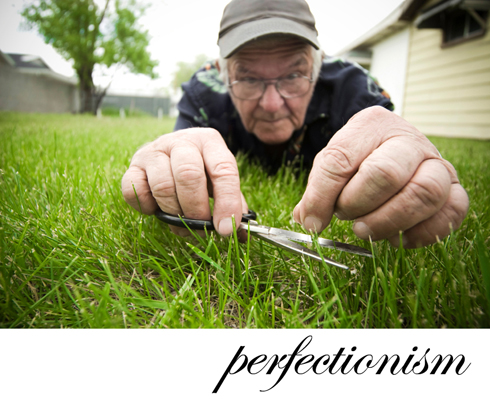
Stupid? Yep. But that was my way of coping with being a perfectionist. I couldn’t accept the possibility of getting less than a top grade so I gave myself an excuse in case I didn’t.

As I began my professional life, I hate to admit that I still had the tendency to procrastinate. But while I could get away with this in school, I quickly realized that as an attorney, it was unacceptable to deliver anything less than my best.

Losing cases was difficult for me. I often took it harder than my clients. I never did get used to it. How did I learn to cope with less than perfect results? By not focusing on the results at all, but instead, focusing on the process.

We can’t control the verdict. There are too many factors outside of our control. We can’t promise results. All we can do is put our best efforts into our work.

If you focus on the outcomes in life, you will ride an emotional roller coaster. If you focus on doing your job and giving it your best, you are successful no matter what the outcome.

I am successful today because instead of focusing on perfect results, I focus on making progress. Because I do that consistently, I have a lot of successful outcomes. When my results are less than optimum, I accept it because I wasn’t focused on the outcome, I was focused on my work.

If you are a perfectionist (or otherwise emotionally attached to outcomes), change your focus to the work in front of you. Get busy with “the next step” and do your best. When you’ve done that, focus on the step after that.

And when you’re done with a project, don’t dwell on the results, get started on the first step in the next project.

Share

A simple way to promote your blawg you’re probably not doing

Share

increase-blog-trafficDo you have a print brochure for your law practice? Most attorneys don’t. They pass out their business card with the url to their web site or blog but a business card generally doesn’t tell people what you do or the benefits you offer. People have to go the your web site to find out and too often they simply don’t.

A brochure would help. But if you don’t want to spend the time or money hiring professionals to create one, there is a simpler alternative.

Take your best and most read blog post or posts and print them. You don’t need to re-set the text so it looks like a brochure, just print out the the posts as is. Add a cover sheet on your letterhead or add a screen shot of your blog’s home page. Or just staple your business card to the front and you’re done. Instant brochure.

No, it’s not slick and polished like a “real” brochure, and that’s okay, it’s not a brochure, it’s a reprint. In truth, your reprint is more effective than a brochure because it’s not slick and it’s not a sales document, it is valuable content that prospects want to read.

Hand out your reprints when you’re you’re speaking or networking. Put some on the table at the back of the room. Put a few copies in your new client welcome kits. Ask your referral sources to put them in their waiting rooms.

You can use this idea online, too. Gather up some of your better posts and assemble them into a PDF.

One of the easiest ways to get more traffic to your blawg is to give people a taste of what they get when they visit. This is a simple and very effective way to do that.

Share

How to kill your chances of success

Share

the worst time to take a vacationThere’s a natural rhythm to building a law practice. You start out from a dead stop, try a lot of things to see what works, and you keep doing what’s working. Eventually, you have some momentum. Things start happening a bit more often. They last a bit longer. They get a little easier.

Before you know it, you’re on a roll.

The same pattern occurs throughout your career, and if you’re smart, you’ll capitalize on your momentum, pouring gasoline on the sparks and fanning the flames until you have a raging inferno of success.

Leveraging your positive results and momentum to build things bigger is not only a smart move, it is essential. How many times have you seen people you know get off to a good start in a project but fail to finish big? How many times have you seen this happen to you?

Momentum is one of the hardest things to achieve and one of the easiest things to lose. The good news is that once you have some momentum, things do get easier. But that doesn’t mean you can stop.

It’s like pushing a car from a dead stop–very difficult at first, but once it’s rolling, it doesn’t take much to keep it moving. If you stop pushing, however, the car will eventually come to a dead stop.

I read a thoughtful article this morning that makes this point in the context of taking vacations. In “The Absolute WORST Day to Take a Vacation (It’s Not What You Think!)” the author says that the worst day to take time off is just after you’ve achieved a goal. When things are starting to happen for you, you shouldn’t take a break, you should double your efforts.

It’s not that you don’t deserve a reward for your hard work. But your reward, says the author, should be your results:

For an entrepreneur (or anyone who is in charge of their own income),vacations don’t come when projects are complete. On the contrary – they should come when the projects are still in progress, but you’re tired, and need to recharge to carry the ball the rest of the way.

Give some thought to this as you plan out the coming year. I know it’s difficult to find time on your calendar for family trips, especially when you must coordinate school and work schedules. At least be aware of the rhythm of your practice and do your best to start projects after a vacation, not before.

Share

Your LinkedIn profile is boring. Congratulations!

Share

your linked in profileLinkedIn studied 135 million user profiles and released their second annual list of the top ten “overused buzzwords”. Here is the list for the US:

  1. Creative
  2. Effective
  3. Organizational
  4. Extensive Experience
  5. Track Record
  6. Motivated
  7. Innovative
  8. Problem Solving
  9. Communication Skills
  10. Dynamic

If you’re grimacing because you used one or more of these words, relax–it’s okay. In fact, using some of these words is probably a good idea. Here’s why:

  1. These words are overused for a reason: they are associated with positive attributes, the kinds of attributes people looking at profiles expect to see.
  2. If you didn’t include these words, people may wonder why. “What, you’re not creative?”
  3. People who use Linkedin profiles for hiring run through them quickly, like resumes, looking for reasons to reject a candidate. If a profile doesn’t have the basics, it may be rejected for that reason alone.
  4. Nobody pays attention. Profiles are skimmed, not read, at least initially, and most of what’s in a profile doesn’t matter. It’s like wallpaper–you would notice if the walls were bare or they were covered in red velvet, but you pay no attention to “regular” wallpaper (unless you’re a designer).
  5. Giving people what they expect to see, albeit with overused buzzwords, makes them comfortable, but it won’t get you the job or the client. Don’t limit your profile to the banal, flesh out your profile to show the uniqueness you offer.
  6. Nobody believes you. You can say what you want about yourself but what really counts is what others say about you, so make sure you have “recommendations”. It’s the most read and most persuasive part of your profile.

What’s the opposite of boring? Flamboyant? Loud? Exciting?

When people are looking to hire an attorney, I think being a little boring is actually a good thing.

Share

My Wish for You in 2012: A Plan for Building Your Law Practice

Share

business development plan for attorney lawyerAre you hoping things will get better in 2012? A lot of people are, but unfortunately, “hope is not a strategy“.

If you want things to get better, you need to make them better. But how?

Don’t start with technique, start with strategy–a plan. What do you want to happen, and why? What will do you do to make it happen? Is this really something you want to do?

Too often, people grab hold of a technique they hear about and run with it. They spend time and money doing the requisite activities, without considering why they are doing it. They install an expensive motor on their row boat hoping it will get them to their destination faster, but they never look at a map.

Techniques are important. Using the right tools for the job, execution, timing–can make a big difference in your results. But without the right strategy, the latest techniques won’t help you to get where you want to go.

What are you good at and enjoy? Writing? Speaking? Networking? Technology? Make it the core of your business building strategy.

Your strategy doesn’t have to be elaborate. In fact, the simpler it is the better. But simple is not synonymous with small. Your plan should inspire you to accomplish big things. After all, the goal isn’t merely to survive, it is to thrive, and you cannot do that by dabbling.

I’ve seen great practices built by using only one or two techniques. Once you know where you want to go and you have a plan to get there, you don’t need dozens of techniques.

Without the right strategy, no technique is good enough, no matter how much it costs or how hard you work at it. With the right strategy, almost any technique will do.

Share

The productive lawyer: squeezing more work into your busy day

Share

productive lawyer attorneyLast night, I heard a speaker talking about how he found more time for work in his already busy schedule.

He had his weekly calendar up on a slide, showing his 12 hour work-days, and showed how he was able to find another 30 hours a week (30!) by doing things like making calls during his commute to and from work, taking 15 minutes to eat lunch instead of an hour, and who knows what else he said, I tuned out about a third of the way through his presentation.

I don’t want to do more work. I work enough as it is. Actually, if I were honest about it, what I want to do is less work. Much less. Like none at all.

Of course that depends on how you define work. Here’s a simple definition I just made up: if it’s not fun, it’s work.

So what I really want to do is get rid of everything I don’t like doing and replace it with things I enjoy.

Is that unrealistic? Good! Then unrealistic is what I want to be!

Yes, I know there will always be things I can’t delegate, things I don’t want to do but must. But that doesn’t mean I have to fill my day with these kinds of things, let alone find ways to squeeze even more hours of unpleasantness into my day.

Okay, I know I’m ranting, but this guy bummed me out. I should have heard him out (so I could share more of his ideas with you) and simply changed the word “work” to fun. “How to find an additional 30 hours a week for fun”. Now that would have been an awesome presentation.

Share

How to get more clients from cases you don’t handle

Share

shield laws for bloggersI’m sure you read the story about the blogger in a defamation case who got hit with a $2.5 million judgment because, the judge said, she is not a journalist and was not protected by the state’s shield laws.

Interesting story. Important subject.

You read the story but did you make any money with it?

Attorneys can easily leverage a story like this to get more media attention, more traffic to their web site, more prospects, more referral sources, and more clients. And I’m not talking about the attorneys who handled the case itself, I’m talking about you.

Interested? Here’s all you have to do.

First, write a two or three page report summarizing defamation laws in your jurisdiction. You don’t have to practice in this area to do this, Uncle Google will help you, or you can ask an attorney friend who does (and tell him about this idea so he can do it, too).

In your report, mention the case about the blogger. Offer your opinion. Include a few citations, maybe a few resources.

Now, go back to Uncle Google and ask him to give you a list of bloggers in your target market(s) who are in your state or province.

Next, contact these bloggers (a personal email will do) and tell them you wrote a report for bloggers about how they can protect themselves against lawsuits like the one in the news. Offer to send it to them, free of charge. Tell them they are welcome to send it other bloggers they know and care about. (If you know the blogger, you could just send them the report in your first email).

In one day, you can get your report into the hands of dozens of people who every day write and influence the people you are targeting for your services. You have provided value to the blogger on a personal level, and asked nothing in return.

Where can this lead? Interviews, hosted webinars for their readers, guest posts, referrals, introductions, you name it.

It doesn’t matter if you don’t practice tort law. If you do, that’s an added benefit, but the point of this effort isn’t to show these bloggers you can help them in this particular area of the law, it’s to meet them.

Now, what else could you do with your report? Here are a few ideas:

  • Send it to local media with a cover letter letting them know you are available for interviews.
  • Call or email your clients and contacts: Who do you know in (your area) who writes a blog? Tell them you have a report that can help them.
  • Offer it through social media; post a video on youtube, opining on the story and linking to your report; offer it via forums, chat groups, listserves, and other areas where bloggers and people who know bloggers congregate.
  • Contact local blogger groups, business groups (anyone who has a blog), and offer a lunch talk.
  • Write about it on your blog or in your newsletter.
  • Take out ads and offer the report, as a “public service”.
  • Send it to lawyers in your practice area in states or provinces where you don’t practice. Tell them what you’re doing with the report in your area, invite them to do the same in theirs. (If you have to ask how this could help you, forget about this idea.)
  • Do a presentation at your bar group’s next function on how you used a news story to market your services.

You get the idea.

Oh, and you don’t need a news story to do this, you can write about anything that affects people in your target market or they people who influence them.

It’s about providing value in a leveraged way. It’s simple and it works. And if your report goes viral, it could help you take a quantum leap in the growth of your practice.

Share