How to write an article in ten minutes or a book in two hours

Share

One way to write more articles, reports, blog posts, or anything else, is by writing faster. One way to write faster is to dictate and record your thoughts and then have them transcribed.

When I first started practicing law we dictated everything and somebody else did the typing. Today, I write everything on a computer and find that I can turn out a finished document almost as quickly. But sometimes, I get caught up in the process of writing and something that should have taken ten minutes winds up taking an hour.

I also find that speaking my thoughts lends a freshness and clarity that is sometimes missing when I write. And so for my next big writing project, I’m going to go back to writing the way I used to do it, by speaking my first draft into a recorder and having it transcribed.

Here are the steps I will be following:

  1. Create an outline. No matter how well you know your material, having the points you want to cover in the order in which you want to cover them will help you stay on point and get the job done more quickly.
  2. Speak and record. The best way to do this is to keep in your mind’s eye a real person you know (or an amalgam of your target audience) and speak to that person. Pretend they are sitting across the desk from you.
  3. Transcribe. You can have someone do this or do it yourself. Doing it yourself allows you to edit as you type.
  4. Edit. Cut out unnecessary ideas and words, flesh out thoughts that need it, and re-order material to enhance clarity. Take any “leftovers” and store them for future articles.
  5. Add an intro and conclusion.
  6. Final edit.

The average human being speaks at a rate of 125 to 150 words per minute. This means that you could dictate the first draft of a 500 word article in just a few minutes or an 18,000 word ebook in a couple of hours. Now, if we could just get paid by the word.

Share

The paperless law office: what’s the big deal?

Share

I like the idea of going paperless. I think most people do. Millions of people have opted for paperless billing and banking, reducing the paper and clutter in their lives and saving on postage and fees. Millions more are investing in scanners to eliminate paper that resides in their closets and file cabinets.

Lawyers in particular, who have more than their fair share of paper, are coming to understand the benefits of a paperless law practice:

  • Saving money. A paperless practice saves the not inconsiderable costs of paper, copy machines, toner, file cabinets, office space, and storage space, not to mention the wages of staff members responsible for creating, storing, and retrieving all that paper
  • Increasing productivity. Digital information can be retrieved, and therefore, utilized, much more readily than paper files. And having information in the cloud means it is available to you anywhere–from home, office, the courtroom, in a meeting.

Converting a law practice to paperless, or even “paper-lite,” is not a simple task for most lawyers. First, there is the process of converting thousands of closed files to their digital equivalents. Then there is the issue of working with current files and open cases using a laptop or iPad instead of a manila folder. How do you get the information in, and how do you get it out? All of this has to be thought through before the first page is scanned. Finally, lawyers must consider the security of client data, both on their hard drive and in “the cloud”.

The larger your practice, the more complicated these issues become. A big practice will probably hire a consulting firm to advise them on the process of going paperless and selecting the tools for doing so. A smaller practice must address the same issues as the big firm but they have more options, many of which are free or low cost.

I wrote about “going paperless” and “data security” in my new eBook, Evernote for Lawyers: A Guide for Getting Organized & Increasing Productivity. If you want to eliminate or reduce the use of paper in your law practice, Evernote is a great tool for doing so. If you are a small firm, it could be all you need.

Share

New eBook Shows Lawyers How to Use Evernote to Organize Everything

Share

If you’re a regular reader of this blog, you know how much I love Evernote. I use it for everything: notes, documents, writing, task management, you name it. Today, I’m proud to announce the release of a new eBook, “Evernote for Lawyers: A Guide to Getting Organized & Increasing Productivity“.

Lawyers manage an incredible amount of information and finding that information quickly is imperative. More and more attorneys use Evernote for capturing notes and web clips, and initially, that’s all I used it for. I’ve since discovered many other ways Evernote can be used to organize the information in my life, and that’s what this book reveals.

Topics include using Evernote for research and writing, time and billing support, marketing and career development, and managing client files and documents. Other chapters include, “going paperless,” “data security,” “working with email,” and “working with your calendar”.

Attorneys who use David Allen’s Getting Things Done® methodology (or want to), will want to read Chapter 4, which covers this subject at length. I’ve written before about my Evernote/GTD system. Evernote for Lawyers presents my latest thinking on this subject, as well as the latest updates to my gtd system and work flow.

Evernote currently has 20 million users world wide and was recently honored as Inc. Magazine’s 2011 Company of the Year.

Evernote is free and is available for Windows, Mac, on the web, and all major mobile platforms. A premium version with enhanced features is also available.

Evernote for Lawyers: A Guide to Getting Organized & Increasing Productivity is available for immediate download in pdf format at OrganizedLawyer.com

Share

How to find time for what’s important

Share

Being productive means doing more of the things that advance your most important objectives and less of the things that don’t. How to you find more time to do the high-value/high-payoff activities?

You don’t.

You can’t find time. But you can buy it.

We only have so many hours in our day. We have to sleep and eat and take care of household duties. We have family and hobbies and other things we do that add value to our lives. We also have responsibilities, things we simply cannot delegate. Add it all up and there are only so many hours a day for work.

The only way you’ll be able to spend more of your work time doing high-payoff activities is by cutting out something else. You must buy back the time you now spend on low-payoff activities so you can spend it on the activities that matter most.

If you want to be more productive (translation: earn more without working more), the following three-step exercise will help:

Step one: take inventory.

For the next week (assuming it is a typical week), write down everything you do, 24 hours a day, in 15-minute increments. (Okay, if you want to use 6-minute increments, you can, but no padding. . .)

If you’re like most people, you’ll resist doing this exercise. You’ll make excuses, you’ll “forget,” you’ll bitch and moan about yet another silly personal development exercise.

Trust me, it’s worth it.

If you can’t do a week, try it for a day. You’ll see. You’ll be amazed at how much time you spend doing some things.

This simple exercise is a real eye-opener for a lot of people. They find large pockets of wasted time they can easily reclaim to do other, more valuable activities.

Which leads to. . .

Step two: Grade yourself.

Go through your time diary again and put a mark next to all of your high-payoff work-related activities. Write down the amount of time you spent on each. Add it all up for the week and divide by five (or six) days.

On average, what percentage of your working day is spent on high-payoff activities?

Highly productive people spend at least 70% of their time working on high-payoff activities. Most people (who are honest with themselves) find their number is 30-40%.

If you discover there’s room for improvement, it’s time for step three.

Step three: Go shopping.

Go through your diary one more time and circle all of your low-payoff activities. Feel free to skip things like grooming, sleeping, meals, caring for children–things you still have to (or want to) do.

What remains is your shopping list of low-payoff activities. This is where you will “buy” time. Go through the remaining list and ask yourself, “What can I cut down on?” and “What can I cut out?”

The point of this is to help you define your current reality and show you a simple way to change it. Spending a few hours this week doing this exercise is truly a high-payoff activity.

Share

This is the most productive week of the year and that’s a shame

Share

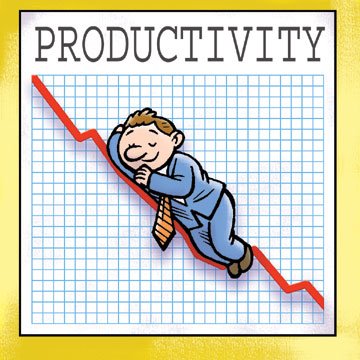
productivitySome people say that this week, the week between Christmas and New Year’s Day, is the most productive week of the year:

  • Fewer people are working, which means fewer emails, fewer phone calls, and fewer disruptions (and lower expectations that you will reply immediately).
  • Most people who are working are coasting, so they aren’t bothering you either.
  • This time of the year is conducive to introspection and planning, both of which are underutilized tools for greater productivity.

I agree. It’s like the week before you go on vacation–you go into hyper-activity mode in order to clear your plate of unfinished projects, tie up loose ends, and plan the work you’ll do as soon as you return.

You know what I’m talking about. You get so much more done that week than you ever do, and you leave town with a clean desk, perhaps for the first time all year. You tell yourself how great how it would be great if you could get that much done every week.

So, why can’t you get as much done every week?

You could. You just don’t. And that’s a shame.

Increased productivity results not from more work but from productive habits. The good news is that just as you learned to be less productive most of the year (compared to what you can do this week or the week before vacation) you can learn to be more productive all year.

The even better news is that you can dramatically increase your productivity by adopting a few new habits. I’ll give you one to get started. In fact, one of my productivity mentors says this is the most valuable productivity habit he teaches.

The habit: “Plan tomorrow before tomorrow begins”.

Every evening, plan out the following day. Don’t wait until the day begins and you’re caught up in it, use the quiet of this afternoon or evening to made decisions about what you will do tomorrow.

The corollary, of course, is to “plan your week before your week begins”. If you’re doing that this week, great. Just remember to do it every week.

Share

Instead of setting goals this year. . .

Share

goal settingDo you like setting goals? I never have, although I’ve set plenty of them. I been a goal-setter for most of my life. I’ve studied goal setting, trained and written articles on goal setting, and know quite about the right and wrong ways to go about it.

After all, goal setting is a key to success, isn’t it? “If you don’t know where you’re going, how will know when you get there?”–that sort of thing. So every year, I set aside time to write my goals for the coming year.

But I never liked it.

I never liked the chore of crafting the right goal. Too many variables.

I never liked the deadlines for reaching those goals. Too much pressure.

And I never liked not reaching my goals. Too much disappointment.

Looking back at decades of goal setting, I can honestly say that formal goal setting has not helped me achieve more, or made my life any better. It’s only made me anxious.

That’s not to say I don’t have goals, I do. I know what I want and I like thinking about it and working towards it. I like achieving those goals and setting new ones. No, goals are a good thing and I’m not giving up on them. What I am questioning is the efficacy of the formal goal setting process.

I know many people who have been successful using a formal process. Maybe they’re built differently. Maybe they thrive when the pressure is on and the days are counting down. Me? Not so much.

So instead of setting formal goals this coming year, with specific details and deadlines and metrics and such, I’m going to be much more relaxed about everything. I know what I want to do this year, or at least the direction I want to go, and I’m going to put one foot in front of the other and keep walking in that direction.

How will I know when I get there? I don’t know, I might not, and that’s just fine. Because the goal really isn’t the point. What’s important is being happy, and as long as there is a smile on my face, I know I’m doing  just fine.

Share

Why you might be procrastinating (and how to stop it)

Share

cure for procrastinationWhen I was a kid in school, I usually waited until the last minute to write papers or study for exams. Actually, there were times when I took the exam without studying at all.

In college, I went through entire courses without reading the text books. I went to the first couple of classes and showed up for the final.

There were times when I paid dearly for these habits. Usually, I did just fine.

Years later, I figured out why I procrastinated. By waiting to the last minute to study or start a paper, I had the perfect excuse in case I didn’t do well.

“Yeah, I got a B, but hey, I didn’t really study.”

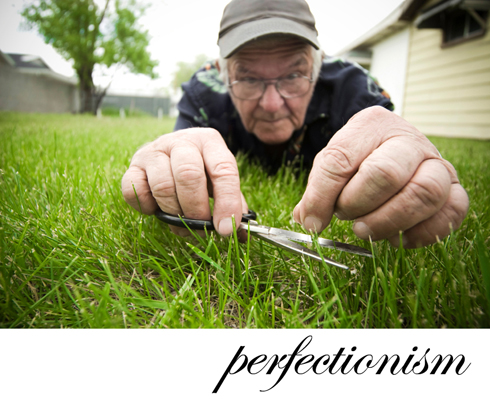
Stupid? Yep. But that was my way of coping with being a perfectionist. I couldn’t accept the possibility of getting less than a top grade so I gave myself an excuse in case I didn’t.

As I began my professional life, I hate to admit that I still had the tendency to procrastinate. But while I could get away with this in school, I quickly realized that as an attorney, it was unacceptable to deliver anything less than my best.

Losing cases was difficult for me. I often took it harder than my clients. I never did get used to it. How did I learn to cope with less than perfect results? By not focusing on the results at all, but instead, focusing on the process.

We can’t control the verdict. There are too many factors outside of our control. We can’t promise results. All we can do is put our best efforts into our work.

If you focus on the outcomes in life, you will ride an emotional roller coaster. If you focus on doing your job and giving it your best, you are successful no matter what the outcome.

I am successful today because instead of focusing on perfect results, I focus on making progress. Because I do that consistently, I have a lot of successful outcomes. When my results are less than optimum, I accept it because I wasn’t focused on the outcome, I was focused on my work.

If you are a perfectionist (or otherwise emotionally attached to outcomes), change your focus to the work in front of you. Get busy with “the next step” and do your best. When you’ve done that, focus on the step after that.

And when you’re done with a project, don’t dwell on the results, get started on the first step in the next project.

Share

The productive lawyer: squeezing more work into your busy day

Share

productive lawyer attorneyLast night, I heard a speaker talking about how he found more time for work in his already busy schedule.

He had his weekly calendar up on a slide, showing his 12 hour work-days, and showed how he was able to find another 30 hours a week (30!) by doing things like making calls during his commute to and from work, taking 15 minutes to eat lunch instead of an hour, and who knows what else he said, I tuned out about a third of the way through his presentation.

I don’t want to do more work. I work enough as it is. Actually, if I were honest about it, what I want to do is less work. Much less. Like none at all.

Of course that depends on how you define work. Here’s a simple definition I just made up: if it’s not fun, it’s work.

So what I really want to do is get rid of everything I don’t like doing and replace it with things I enjoy.

Is that unrealistic? Good! Then unrealistic is what I want to be!

Yes, I know there will always be things I can’t delegate, things I don’t want to do but must. But that doesn’t mean I have to fill my day with these kinds of things, let alone find ways to squeeze even more hours of unpleasantness into my day.

Okay, I know I’m ranting, but this guy bummed me out. I should have heard him out (so I could share more of his ideas with you) and simply changed the word “work” to fun. “How to find an additional 30 hours a week for fun”. Now that would have been an awesome presentation.

Share

The two elements of productivity (and why you need both)

Share

In his excellent article, “27 Productivity Killers: Why Nothing Ever Gets Done!” author Matt Tanguay presents a laundry list of reasons for failed productivity.

He begins with a “top level” view:

  • You have too much on your plate. Whether you don’t want to say no, you don’t know how or you can’t, you end up having too much to do.
  • The spirit is willing, but the flesh is weak. Your body has needs. You need to give it the proper food, exercise and time off to stay optimally healthy.
  • The flesh is willing, but the spirit is weak. Your attitude is greatly affected by external factors such as your relationships, your finances and the kind of work you’re doing.
  • There’s always tomorrow. Procrastination is caused by obstacles and friction. These tips will help you make sure you stop procrastinating altogether.
  • Stuff keeps coming up. Interruptions from email and phone calls, distractions from your personal life, as well as meeting overload can easily kill your productivity.
  • Doing the wrong things. Clarity is power. And once you’re clear about what you want, you need the right strategy and plan of action.

He then presents “productivity killers” in each of these areas.

But what is productivity? Is it

  • Getting things done?
  • Getting MORE things done?
  • Efficiency?
  • Effectiveness?

Productivity isn’t about getting things done, it’s about getting the right things done. Getting things done means you’re busy; getting the right things done means being effective.

But productivity is also about producing desired results efficiently, meaning as quickly and abundantly as you want.

You may be effective at bringing in clients but inefficient if this takes up too much of your time. You may be efficient at organizing your files but if this isn’t helping your practice grow (desired result), you’re not being effective.

Productivity requires effectiveness and efficiency.

By and large, Tanguay’s 27 “productivity killers” are really “efficiency killers”. They don’t necessarily stop you from producing desired results, but they could be slowing you down or making you pay too high a price for those results.

There are some good suggestions here. Just make sure you don’t use them to become efficient at the wrong things.

Share

Does your email Inbox need to go on a diet? Try mine.

Share

email overloadMy spell checker tells me “unsubscribe” isn’t a word but I know it is because I’ve been doing a lot of it lately.

Now that I’ve achieved “Inbox Zero” (I’ll tell you how I did it in a later post) new emails into my nearly-empty Inbox stand out like a big pimple on an otherwise unblemished forehead. And I’m getting more these days now that the holiday shopping season is in high gear.

And so I’m being ruthless at unsubscribing (also not a word) from as many newsletters and other email subscriptions as possible. I know I can always re-subscribe if I change my mind.

It feels great. You should try it.

Ask yourself, “Do I usually read email from this person/company/group?” If the answer is no, hit the unsub link (okay, now I’m making up words).

If you’re not sure, or if you do at times read these emails, leave the subscription in place for now. You can have another go at this once you’ve removed the most obvious subscriptions.

Another option is to create a filter to automatically send these emails to your email archive. You’ll still get them but you won’t have to see them, unless and until you choose to. Filters are easy to set up in gmail; check your email client’s help file to see if this is possible and how to do it.

A third option for reducing the amount of incoming email is to set up another email address specifically for these subscriptions. Some email services allow you to change your email address. Others require you to unsubscribe and re-subscribe with the new email address.

I have an email address I set up for this purpose. Right now I have all of those messages forwarded to my regular Inbox, but it’s easy to turn off this function. I can then check the other email account once a month, scan through the messages, and decide if there is anything worth reading.

I like getting email. It’s an important part of my work and personal life. I’m sure email is important to you, too. But when you get too many emails, particularly emails you aren’t reading, it’s time to put your email Inbox on a diet.

You might want to hurry. The after Christmas sales will be here before we know it.

Share