The productive lawyer: squeezing more work into your busy day

Share

productive lawyer attorneyLast night, I heard a speaker talking about how he found more time for work in his already busy schedule.

He had his weekly calendar up on a slide, showing his 12 hour work-days, and showed how he was able to find another 30 hours a week (30!) by doing things like making calls during his commute to and from work, taking 15 minutes to eat lunch instead of an hour, and who knows what else he said, I tuned out about a third of the way through his presentation.

I don’t want to do more work. I work enough as it is. Actually, if I were honest about it, what I want to do is less work. Much less. Like none at all.

Of course that depends on how you define work. Here’s a simple definition I just made up: if it’s not fun, it’s work.

So what I really want to do is get rid of everything I don’t like doing and replace it with things I enjoy.

Is that unrealistic? Good! Then unrealistic is what I want to be!

Yes, I know there will always be things I can’t delegate, things I don’t want to do but must. But that doesn’t mean I have to fill my day with these kinds of things, let alone find ways to squeeze even more hours of unpleasantness into my day.

Okay, I know I’m ranting, but this guy bummed me out. I should have heard him out (so I could share more of his ideas with you) and simply changed the word “work” to fun. “How to find an additional 30 hours a week for fun”. Now that would have been an awesome presentation.

Share

The two elements of productivity (and why you need both)

Share

In his excellent article, “27 Productivity Killers: Why Nothing Ever Gets Done!” author Matt Tanguay presents a laundry list of reasons for failed productivity.

He begins with a “top level” view:

  • You have too much on your plate. Whether you don’t want to say no, you don’t know how or you can’t, you end up having too much to do.
  • The spirit is willing, but the flesh is weak. Your body has needs. You need to give it the proper food, exercise and time off to stay optimally healthy.
  • The flesh is willing, but the spirit is weak. Your attitude is greatly affected by external factors such as your relationships, your finances and the kind of work you’re doing.
  • There’s always tomorrow. Procrastination is caused by obstacles and friction. These tips will help you make sure you stop procrastinating altogether.
  • Stuff keeps coming up. Interruptions from email and phone calls, distractions from your personal life, as well as meeting overload can easily kill your productivity.
  • Doing the wrong things. Clarity is power. And once you’re clear about what you want, you need the right strategy and plan of action.

He then presents “productivity killers” in each of these areas.

But what is productivity? Is it

  • Getting things done?
  • Getting MORE things done?
  • Efficiency?
  • Effectiveness?

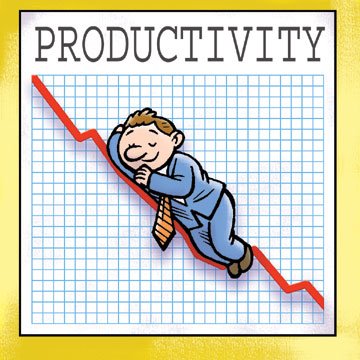
Productivity isn’t about getting things done, it’s about getting the right things done. Getting things done means you’re busy; getting the right things done means being effective.

But productivity is also about producing desired results efficiently, meaning as quickly and abundantly as you want.

You may be effective at bringing in clients but inefficient if this takes up too much of your time. You may be efficient at organizing your files but if this isn’t helping your practice grow (desired result), you’re not being effective.

Productivity requires effectiveness and efficiency.

By and large, Tanguay’s 27 “productivity killers” are really “efficiency killers”. They don’t necessarily stop you from producing desired results, but they could be slowing you down or making you pay too high a price for those results.

There are some good suggestions here. Just make sure you don’t use them to become efficient at the wrong things.

Share

Does your email Inbox need to go on a diet? Try mine.

Share

email overloadMy spell checker tells me “unsubscribe” isn’t a word but I know it is because I’ve been doing a lot of it lately.

Now that I’ve achieved “Inbox Zero” (I’ll tell you how I did it in a later post) new emails into my nearly-empty Inbox stand out like a big pimple on an otherwise unblemished forehead. And I’m getting more these days now that the holiday shopping season is in high gear.

And so I’m being ruthless at unsubscribing (also not a word) from as many newsletters and other email subscriptions as possible. I know I can always re-subscribe if I change my mind.

It feels great. You should try it.

Ask yourself, “Do I usually read email from this person/company/group?” If the answer is no, hit the unsub link (okay, now I’m making up words).

If you’re not sure, or if you do at times read these emails, leave the subscription in place for now. You can have another go at this once you’ve removed the most obvious subscriptions.

Another option is to create a filter to automatically send these emails to your email archive. You’ll still get them but you won’t have to see them, unless and until you choose to. Filters are easy to set up in gmail; check your email client’s help file to see if this is possible and how to do it.

A third option for reducing the amount of incoming email is to set up another email address specifically for these subscriptions. Some email services allow you to change your email address. Others require you to unsubscribe and re-subscribe with the new email address.

I have an email address I set up for this purpose. Right now I have all of those messages forwarded to my regular Inbox, but it’s easy to turn off this function. I can then check the other email account once a month, scan through the messages, and decide if there is anything worth reading.

I like getting email. It’s an important part of my work and personal life. I’m sure email is important to you, too. But when you get too many emails, particularly emails you aren’t reading, it’s time to put your email Inbox on a diet.

You might want to hurry. The after Christmas sales will be here before we know it.

Share

Getting things done when you have “vacation brain”

Share

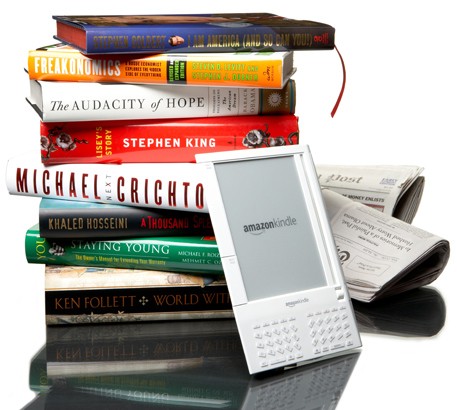
books reading kindleOne of the precepts of the Getting Things Done or GTD methodology is that it’s not necessary to prioritize your Next Actions in advance, nor is it recommended. For one thing, priorities change. What seems important today might be completely unnecessary a week from today.

Also, priorities are contextual. Picking up a new cartridge for your laser printer is something you do while running errands, not at ten o’clock at night.

Priorities, then, should be established during your daily planning, which I contend should take place the night before, and “in the moment”.

To prioritize, review your action lists and determine what you want to do based on three factors: time, energy, and importance (priority).

So today, I may see a task that is important but will take a block of two hours and I don’t have that much time. Or it requires a fair amount of energy and I’m tired. Or I have lots of time but the task under consideration really isn’t that important. These tasks will have to wait.

Some people partially prioritize tasks as they add them to their lists, noting time (how much time they estimate the task will take) and energy (how much they will need, i.e., low, medium, or high). This way, when they don’t have a lot of time or energy, they can scan their lists to find tasks that match.

I usually don’t prioritize in advance. I add a lot of tasks to my list each day and I don’t want to take the time to think about whether something will take ten minutes or twenty minutes or whether I will need high energy or just medium. To some extent, I make these decisions when I review my lists and often, I simply choose what I am inspired to do.

This week is Thanksgiving week in the United States. Some people are working like crazy to clear their desks before the long weekend and some are already in “vacation mode”. If you are in the latter category, at work but finding yourself unable to get much done, go through your lists and look for low time/low energy activities you can do.

If you have “vacation brain” and don’t have a list of low energy tasks to dig through, or your list doesn’t inspire you to take action, check out this list of mindless, but productive tasks that inspired this post.

Or, if you’re like me, you’ll just catch up on your reading.

Share

“It’s the cases I don’t take that make me money”

Share

“Besides the noble art of getting things done, there is the noble art of leaving things undone. The wisdom of life consists in the elimination of nonessentials.” -Lin Yutang, writer and translator (1895-1976)

Last night, I spoke at an event. One of the topics I talked about was “The 80/20 principle,” aka, “The Pareto Principle,” the idea that a large percentage of our results come from a small percentage of our activities.

Afterwards, I was chatting with a man who works for a bankruptcy attorney. He liked my talk and was telling me about their practice and how busy they were. He quoted something his employer said, but I wasn’t sure I’d heard him correctly so I asked him to repeat it:

“It’s the cases I don’t take that make me money”.

He explained that the attorney was very selective about the cases he accepts. A lot of business comes knocking on his door, but he turns down a large percentage. He turns down the lower-end of the spectrum of clients, the ones who don’t have enough for a retainer, who need installments, price shoppers, etc., in favor of those who can pay his higher than average fees.

A lot of attorneys will take the lower-end clients, figuring that whatever they pay will contribute to overhead. But this attorney understands that those clients would actually cost him money, and not just in the literal sense of “not paying,” but because they would take up a disproportionate amount of time and energy.

And, he doesn’t have the extra overhead he would have if he accepted the lower end clients.

By eliminating as much as eighty percent of the possible client pool, he is able to run a lean and profitable practice. I’m sure he also makes it home for dinner.

Share

Why I’m no Longer a Workaholic Attorney (and How I Got Cured)

Share

workaholic attorney lawyerWhen I opened my own practice, I practically lived at my office. I buried myself in what little work I had and spent the rest of the time organizing files, creating forms, and worrying about how I was going to get some business.

Later on, when I had lots of clients and lots of work, very little changed. I put in long hours at the office or in court, I brought home files at night and on weekends, and when I did manage to take a day off, I was on the phone with my office every couple of hours.

Some people called me a workaholic. What I was was scared s***less.

When I had no clients and no money coming in, I was paralyzed with fear. I looked at the calendar and saw the first of the month approaching and knew there was no way I could pay the rent. I tried everything I could think of to bring in business but I spent even more time distracting myself with busy work.

When I finally had clients and real work to do, I was afraid it wouldn’t last so I buried myself in my work and made as much money as I could, as fast as I could. There was no way I was ever going back to my “lean and hungry” days.

I’m no shrink, but I think workaholic-ism is driven by fear. We may tell ourselves that we love what we do and this might be true to some extent, but it also might be a story we’ve told ourselves for so long that we actually believe it.

Nobody has the right to tell you how to conduct your business and if non-stop work makes you happy, I’m happy for you. Just be honest about it. Don’t kid yourself into thinking this is what you want or this is the way it has to be.

If you’d like to work a bit less and enjoy some of life’s other offerings, you can. I know because I did it.

How did I break free of the fear of losing what I had finally achieved? How did I stop working so many hours and eventually get down to working just three days a week?

I changed my focus.

I no longer focused on things that made me fearful.

Instead of thinking about what I did not want (e.g., being broke) and using that to drive me, I thought about what I did want.

I wanted the feeling of security and strength and power that money brings. I wanted to help people solve problems. I wanted to spend time with my family and to travel. I wanted to be able to read fiction, go to the movies, eat in nice restaurants and wear fine clothes.

There were plenty of things I wanted and when I began to focus on them, instead of what I didn’t want, things began to change.

It was a process. I started with little things. Whenever I found myself thinking about the possible consequences of working fewer hours, for example, I would stop myself and think about going to a book store and browsing for an hour. A pleasant thought for a book lover like me. I relaxed. I stopped thinking about what I didn’t want. It felt good.

Eventually, I didn’t just think about going to a bookstore, I actually went. My world didn’t come crashing down on me. The clients didn’t leave. The work was still there, and so was the money.

Little by little, I trained myself to think about what I wanted and to let go of my fear of losing what I already had.

If you are a workaholic and you don’t want to be, there are many things you can do to let go of the compulsion to work. Try them if they inspire you.

But you don’t really need anything more than to let go of the fear-inducing thoughts that hold you back. Replace them with thoughts of a better future and let those pull you forward.

Wherever you are, whatever you’re doing, keep coming back to your vision of an ideal life, a life of happiness and success, of work that that gives you joy but does not overwhelm. Keep doing this and you will create that life. This is the law of attraction.

Think about what you want, not what you don’t want.

Share

Write or Die: A Simple Solution to Writers’ Block

Share

cure for writers blockI’m not sure I believe in writers’ block. I believe in “no talent” and “no ideas” but writers block? You don’t have trouble speaking, do you? I don’t mean public speaking, I mean vocalizing your thoughts out loud to another human being or into a microphone.

No such thing as “talkers’ block” so why “writers’ block”?

And yet, people who can write, don’t.

It might be perfectionism. I lean in that direction. You don’t want to show anyone your writing until it’s perfect and it never is. But, if writing is important to you, you get over this.

It’s often a lack of time. Attorneys are busy people. All day you’re on the run, and at the end of the day, you’re tired. Weekends, you have chores and you need some family time. You want to write, you know you can write, but days and weeks go by and it doesn’t get done.

You need a deadline.

When you have a deadline, it is amazing how much you can get done. You need to get a pleading filed by a certain date, you do it. You promised an editor you’d finish an article, you do. A deadline holds you accountable. Just ask the IRS.

An example of what can be done when there is a deadline is National Novel Writing Month, aka, “NaNoWriMo”. Every November, participants from around the world commit to writing a 50,000 word novel in 30 days. In case you don’t know, writing 1,667 words a day every day for a month is a tall order; writing 1,667 novel-worthy words is simply astounding.

And yet each year, thousands finish a 50,000 word novel within the 30 days.

The 30 day deadline imposes a daily word quota. Participants use their word processor or text writing app to make sure they write enough words each day so they don’t fall behind. You could do the same thing. Pick a number of words you will write each day and don’t stop writing until you do.

Another technique writers use is to set a timer for ten or twenty minutes and write without stopping until the timer sounds. Then, they are done for the day or if they haven’t met their word quota, they go for another ten or twenty minutes.

This is the Pomodoro technique, which can be used for any kind of task. The idea is that you can do anything for ten minutes, no matter how much you might not want to or how busy you might be. Many books have been written in blocks of ten or twenty minutes a day.

I’ve written about the Pomodoro technique before, and recommended Focus Booster, an app I sometimes use when I need to concentrate.

In reading about NaNoWriMo, I learned about Write or Die, a timer app for writers. It allows you to set a word quota and a time quota. It also allows you to impose a penalty. If you don’t meet your quota or you stop writing before the time limit, the app will play a loud and annoying sound. Weird, but it works.

You can configure the app for different word counts, times, and penalties. In one setting, if you don’t make your quota, whatever you have written up to that point gets deleted. How’s that for accountability!

The app is free and there are paid desktop versions. If you need some help sticking to a writing schedule, Write or Die could be for you. Or, you could have your mother in law call you once a day to ask if you got your quota done.

Share

Slowing down to speed up

Share

Stop running. Yes, I know you have to get to court, crank out a new agreement, and meet with your new client. I know you’re busy and this is how you earn your living. I know that if you don’t do the work you won’t get paid.

Slow down anyway. Better yet, come to a complete stop.

At least for a few hours.

Slowing down allows you to refine what you’re doing so you can do it better, and faster. Just as a race car needs pit stops, so do humans. By taking a break periodically, we can ensure that everything is working properly and that we are on course and on pace. Taking a break allows us to recharge our energy and clarify our focus. It allows us to go faster, assured that we are going in the right direction.

Take some time to evaluate what you are doing and the results you are getting. Are things moving in the direction you want? Is there anything you could do better? What’s working well that could be expanded?

Take some time to look at your calendar. How are you spending your time? What else might you do? Is there something you are doing that you don’t really need to do? Is there something that takes you two hours that could be done in one?

Take some time to rest and reflect on the bigger picture. What big ideas could you start working on that might help you take a quantum leap? Where do you want to be five years from today and what could you start doing today to help you get there?

Take some time to get rid of clutter and distractions. If it doesn’t serve you in some way, eliminate it. Simplify your life so you can focus on what is important and valuable.

Take some time to read things you don’t usually read. Look for ideas and inspiration. Have some fun. Goof off. Go to the movies in the middle of the day. Take your best friend for a long lunch.

And take some time to give thanks for all that you have. When you appreciate the goodness in your life, you attract more of it.

Share

Do you have too many clients?

Share

Attorneys with too many clients to serveMost attorneys say they want to get more clients but if they’re not ready for more clients, it can actually cost them.

If you can’t serve your clients, they aren’t going to stay. You must have the staff and other resources in place to do the legal work and support functions or new clients will leave as quickly as they came.

What about “one time” clients? You’re going to handle their divorce or bankruptcy or injury claim, do their estate plan or handle their closing, and you’ll probably never see them again. Can you have too many of them?

Yes. These clients may not themselves return but if you treat them well, they can and will send you referrals. If you don’t, not only will they not send you new business, they’ll tell everyone they know that you are sloppy or slow and did not do a good job for them.

Taking on too many clients is especially a problem for firms that grow quickly. Legal services do not scale in the same way selling widgets does. We are in a personal service business and we need people to provide that service. It takes time to find the right people, hire and train them. Unbridled growth can cause serious financial problems, inordinate stress, and an increased risk of malpractice for the firm that is unprepared.

Rapid law firm growth is not uncommon. A dramatic upsurge in “intakes” can occur for a variety of reasons. Every firm needs to have a plan in place now, before that growth occurs.

If your practice tripled in the next 90 days, where will you go to find the personnel, the technology, and the other resources you need to accommodate that growth?

Will you partner with another firm? Turn away the smaller business to handle the bigger cases or clients? Will you hire a head hunting firm or consultant?

Start thinking about these things right now, and not just because you need to be prepared. Think about these things because in doing so, you will send a message to your subconscious mind that you are ready for and expecting that growth. You will then start seeing things you need to see and attracting the information and the contacts you need to make that growth a reality.

Too many clients? A nice problem when you’re ready for it.

Share

Are you getting the RIGHT things done?

Share

three most important tasks for todayPeter Drucker once said, “There is nothing so useless as doing efficiently that which should not be done at all.” Far more important than “doing things right,” he said, is “doing the right things”.

Every day, I review my task lists and choose the three “most important tasks” for the day. My most important tasks are those which advance my most important objectives. My “MITs” go at the top of my list and I make an effort to do them before I do anything else. If I get these three things done, I consider it a good day.

Three is a good number, but sometimes there are only two. There are days when a fourth MIT slips through and makes it to my list, but I try to focus on no more than three.

Three MITs keeps me from getting overwhelmed by a longer list and gives me a sense of accomplishment. When I get my three MITs done, I then take care of less important tasks. Or, if it’s early in the day and I feel like it, I might add another MIT to the list.

At times, you may find it difficult to choose three MITs. You may have ten things that MUST get done today. No problem. Of the ten, which three are the MOST IMPORTANT? Make those your MITs and do them first.

Each day, you will have MITs and you will have other tasks. The other tasks may be important and need to be done. They may even be urgent. I’m not telling you to ignore these other tasks. Do them, but whenever possible, do them after you do your MITs.

The GTD methodology helps me to get things done. A daily list of MITs helps me to get the right things done.

Share