The Zen of Attorney Marketing: Quietly Building a Successful Law Practice

Share

What if you could build a successful law practice quietly–without shouting your message but by letting your message be heard, without trying to find clients but by letting clients find you?

In my father’s day, attorneys didn’t do any marketing. Oh, they did a little networking or public speaking or they wrote the occasional article, but they did these things because they naturally flowed from what they were doing in their practice. They didn’t attend a bar meeting because they were “marketing”; they went because they enjoyed being there, catching up with their friends, and learning some things they could use in their practice.

It’s different today. Not because there is more competition, higher overhead, or a faster paced world. Yes, the world is much more complex than it was fifty years ago when my father started practicing, or thirty years ago when I did, or even fifteen years ago, before everyone had broad band and smart phones. But our world is not different so much because of those things but because we make it so.

We run and push and struggle because we’ve bought into the notion that to be successful, we have to shout louder, promote harder, and spend bigger. We advertise or jump on board the latest social media concept, not because it feels natural, not for the joy of doing it, but because we fear being left behind.

Is the effort worth it? We might bring in more clients but are we any happier? Too often, the answer is “no”.

How do we get back to the way it used to be when a lawyer’s practice grew naturally? By getting out of your own way and letting things happen, instead of constantly trying to make them happen.

It starts with letting go of assumptions that don’t serve us and realizing that marketing can not only be organic, for sustained success and true contentment, it must be. Marketing can never be something you loathe or feel like you “have to do.” It cannot be something you do, it must be an expression of who you are.

Leo Babauta, who writes the Zen Habits blog, reminds us that sustained success and contentment don’t come from following the herd or from doing things you resist doing but feel you must, they come from delivering value, something my father didn’t need to read, he just did.

Share

What the iPhone app store can teach you about marketing legal services

Share

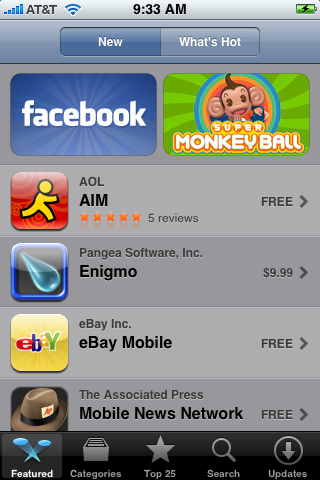
I was scrolling through the “Top 25 list” in the app store on my iPhone and noticed that the top grossing apps (mostly games) are either free or .99.

How can something that’s free or almost free be top grossing? The answer is simple: Upgrades, add ons, and back-end purchases. These companies sell “other stuff” via “in app purchases”–additional tools, levels, or other capabilities–and enough people buy on the back end that they can afford to give away their product on the front end.

It’s the “freemium” business model and while the term is relatively new, the concept is as old as marketing itself. “Sampling,” as it is traditionally referred to, is a proven way to sell everything from toothpaste (coupons and trial size) to automobiles (free test drives) to Tempura chicken in the food court (a sample on a toothpick).

Even attorneys use it (free consultations).

The idea is simple: give people a taste and they’ll want the whole meal. The free sample allows the consumer to overcome doubt and indecision, to experience the product or service on a small scale, with no cost or obligation, before making the decision to buy. The more you give away, the more you sell.

How can you apply this to marketing your services?

If you’re not now offering free consultations, I suggest you consider doing so. Many attorneys resist this, claiming their time is too valuable, they don’t want to give away their expertise because that’s all they have to sell, and while these may be brilliant attorneys. . .

they’re not very good at math.

If you invest an hour of your time in a free consultation and get a $10,000 paying client as a result, I don’t know, that seems like a pretty good trade off to me. I know you say there are only so many hours in a day and you can’t equate giving away a game app with giving away legal services, but actually, you can.

It doesn’t matter whether you’re a six-year old with a lemonade stand or a partner in a 1,000 lawyer firm, the formula is the same:

  1. How much did you spend to get the business, and
  2. How much did you generate in revenue?

The difference, minus fixed costs, is profit.

And, since legal services are generally high ticket and high margin, attorneys are actually better suited to using sampling in their marketing. We can afford to spend more to acquire a new client since we earn so much more.

So, let’s take things a bit further. If free consultations work, how about free services? Could you offer a free or highly discounted service on the front end, knowing you will more than make up the difference on the back end?

Yes you can.

Which brings me back to the app store.

Recently, I’ve noticed a spate of new apps by lawyers, mostly personal injury firms. They explain what to do in case of an accident and provide a place to record information, take photos, etc., and they are free. The lesson isn’t that iPhone apps are a viable way to bring in clients, although they may well be, it’s that if you can’t or won’t give away a sample of your services, give away information.

Free information in any form–reports, tip sheets, checklists, booklets, audios, and iPhone apps–can do much of what a free consultation or free service can do–give prospective clients a taste of what you can do for them.

If you want more clients, give samples.

Update: After posting this, I saw this article discussing app pricing strategies, in case you’re thinking in that direction. Interesting reading even if you’re not.

Share

This is WHY the ABA wants new rules to regulate online lawyer marketing

Share

world's tackiest lawyer ad everLast week, I joined the chorus of attorneys who strongly object to the ABA’s proposal to promulgate new rules regulating what attorneys can do on the Internet to market their services.

This weekend, I saw a video of a TV commercial by Florida divorce attorney, Steven D. Miller and thought I might have been hasty. The video, which someone put on YouTube with the caption, “Tackiest Lawyer Ad. . .Ever,” is a prime example of why the ABA is considering new rules. Watch and you’ll see why.

[mc src=”http://www.youtube.com/watch?v=y1Qk6QPzuIc” type=”youtube”]Tackiest Lawyer Ad Ever[/mc]

Wait. It gets better.

The web site for Mr. Miller’s practice is. . . (are you sitting down?). . . “DivorceDeli.com“. Yep, you can look at their menu, call or click, and order your divorce. “Would you like pickles with your restraining order?”

I’m pretty open minded but let’s face it, this commercial and the entire “deli” concept is in very bad taste. It reflects poorly on all lawyers. One subscriber to this blog wrote to say he was against lawyer advertising of any kind because of the negative impression lawyers’ TV commercials have on juries and this has to be “Exhibit A”. But as ugly as this is, I still don’t want (or think we need) more rules.

I don’t want to legislate taste. I don’t want to outlaw embarrassing behavior. I don’t want to be told what I can and cannot do. And, unless it is the only way to prevent serious, irreparable harm, I don’t want to tell anyone else what to do.

Mr. Miller obviously does what he does because it’s working for him. God bless him. He’s serving a segment of society that might otherwise be denied access to the legal system because of their lack of funds (or good taste). I disagree with his approach but I must defend his right to do what he does without interference from the ABA or anyone else.

So, whether you laughed at this video and web site or recoiled in disgust, I hope you’re with me. If you agree that despite examples like these, we don’t need or want additional regulations, please tell the ABA.

Comments should be sent to: Natalia Vera, Senior Research Paralegal, Commission on Ethics 20/20 ABA Center for Professional Responsibility, 321 North Clark Street, 15th Floor, Chicago, IL 60654-7598. Phone: 312/988-5328, fax: 312/988-5280 and email: veran@staff.abanet.org. The comment period ends on December 15.

Share

Getting started with online video–so simple, even an attorney can do it

Share

youtubeOnline videos are easier to create than you might think. The video below shows you what I’m using to create my first online videos and how I’ve been able to use them to drive a lot of free traffic to this web site.

If you know of any resources I missed, please leave a comment. And please share on Twitter (Facebook, et. al.)

[mc src=”http://www.youtube.com/watch?v=Li111bDWyow” type=”youtube”]Getting started with online video[/mc]

Share

Attorney Turns Director–Debut Film Exposes American Bar Association Plot

Share

David S. Ward is the Hollywood writer and director of “Field of Dreams,” “The Sting,” and many other amazingly successful films. I never met the man but when I lived in Beverly Hills I would sometimes get calls from his fans, telling me how much they enjoyed “my” latest movie. I confess to having a lifelong dream of writing novels and screenplays but for years, David M. Ward has lived in the shadow of David S. Ward.

Not anymore.

Today, my dream has become reality as I am now the writer, producer and director of my first motion picture.

Last week, I found out from Larry Bodine that the ABA wants to regulate marketing on the Internet. Big Brother wants to control just about everything we do online. According to Larry, the proposal would have a chilling affect on every aspect of attorney marketing:

  • Online social networking (Facebook, LinkedIn & Twitter)
  • Blogging
  • Facebook and Linkedin profiles
  • Pay per click advertising
  • Gathering information through networking websites
  • Discussion forums
  • Lawyer websites
  • Use of case histories on law firm websites

Tom Kane echoed Bodine’s concerns and I do too.

We have enough rules. Too many rules. Unnecessary rules. We are regulated, micro-managed, watched, and warned, by the very organization that is supposed to represent our interests. True, the ABA has no direct jurisdiction over us but they wield tremendous influence over the bar associations that do.

Enough is enough

I decided to do something about it. This film, “The Convention,” is an urgent message to all attorneys to rise up and tell the ABA, “we’re mad as hell and we’re not going to take it anymore!”

And now, I present to you, uncensored and uncut, “The Convention”:

[mc src=”http://www.youtube.com/watch?v=93lmTepypqU” type=”youtube”]The Convention: A young lawyer attends his first ABA Convention[/mc]

Okay, just having some fun but this is a very serious subject. I urge you to write to the ABA and tell them to keep their hands off. The cut off for discussion is December 15, so please voice your concerns and tell your colleagues to do the same.

Share