Dear Attorney: Why should I hire you?

Share

why should i choose you instead of any other attorneyAs you think about the end of this year and the start of a new one, there’s something you should spend some time contemplating: Why should a prospective client choose you instead of any other attorney?

After all, they could choose from a long list of other attorneys. In some cases, if their needs are simple enough (or they think they are) they can also choose a paralegal or other non-attorney. In any case, not you.

So why choose you?

It’s an important question, don’t you think? Spend some time thinking about this and crafting your answer so that if someone asks, you can confidently answer in a way that inspires them to take the next step in your direction.

A good place to start is by using your imagination. Pretend a prospect is sitting in your office, across the desk from you, pen and paper in hand. You’ve discussed their issue with them, answered their questions, and shown them their options. Then, they pop the question: Why should I hire you instead of any other lawyer?

What would you say?

Write down everything you can think of. No doubt you’ll mention your track record, results you’ve obtained for other clients, and your accolades and awards. You’ll talk about your firm’s resources and capabilities. You’ll say things like “dedication” and “hard word” and “caring”. And all of this is good. But it’s not enough.

For one thing, nobody really cares that you are the biggest, oldest, or most successful. It’s not meaningless, but it’s not that important because it’s all about you. Your prospects want to know what’s in it for them.

In addition, those other lawyers are saying something very similar.

So dig deeper. What makes you different? Why are you the better choice? What co your clients get they don’t get from any other lawyer?

These aren’t easy questions to answer. You may not have a good answer, or any answer, and that’s okay right now. At least you’re thinking about this and if you continue to think about it, eventually you will start doing things that will provide you with a great answer.

Your prospects may never ask you this question. They may never even think it. And, in truth, most will make their decision based on how you make them feel when they speak to you, not on any quantifiable measure of your superiority. But don’t get complacent.

In the end, the attorney who delivers the highest standards of service and benefits to his or her clients is the attorney who will attract more of them. Even if nobody asks.


Share

This is the most productive week of the year and that’s a shame

Share

productivitySome people say that this week, the week between Christmas and New Year’s Day, is the most productive week of the year:

  • Fewer people are working, which means fewer emails, fewer phone calls, and fewer disruptions (and lower expectations that you will reply immediately).
  • Most people who are working are coasting, so they aren’t bothering you either.
  • This time of the year is conducive to introspection and planning, both of which are underutilized tools for greater productivity.

I agree. It’s like the week before you go on vacation–you go into hyper-activity mode in order to clear your plate of unfinished projects, tie up loose ends, and plan the work you’ll do as soon as you return.

You know what I’m talking about. You get so much more done that week than you ever do, and you leave town with a clean desk, perhaps for the first time all year. You tell yourself how great how it would be great if you could get that much done every week.

So, why can’t you get as much done every week?

You could. You just don’t. And that’s a shame.

Increased productivity results not from more work but from productive habits. The good news is that just as you learned to be less productive most of the year (compared to what you can do this week or the week before vacation) you can learn to be more productive all year.

The even better news is that you can dramatically increase your productivity by adopting a few new habits. I’ll give you one to get started. In fact, one of my productivity mentors says this is the most valuable productivity habit he teaches.

The habit: “Plan tomorrow before tomorrow begins”.

Every evening, plan out the following day. Don’t wait until the day begins and you’re caught up in it, use the quiet of this afternoon or evening to made decisions about what you will do tomorrow.

The corollary, of course, is to “plan your week before your week begins”. If you’re doing that this week, great. Just remember to do it every week.

Share

Attorneys: Don’t let your competition do this to you

Share

competition There are a lot of attorneys who do what you do, right there in your market. Many of them have more experience than you do. They have a bigger marketing budget, a better blog, and more traffic to their web site. They have better-paying clients and get more referrals. They earn more than you do. Hell, they’re even better looking.

But no matter what advantages your competition have over you, you can keep them from beating you.

How do you stop a stronger opponent, or worse, an army of them? By ignoring them.

Stop looking at what other attorneys are doing. Forget about what they have. Don’t compare yourself to others. It’s the worst thing you can do for your career or your self-esteem.

Stay focused on what you do, on your clients, on your work. Build your practice, and don’t worry about what anyone else is doing. Or as a friend of mine says, “keep your eyes on your own paper.”

No matter what advantages your competition may have, they can’t beat you unless you let them.

Share

Instead of setting goals this year. . .

Share

goal settingDo you like setting goals? I never have, although I’ve set plenty of them. I been a goal-setter for most of my life. I’ve studied goal setting, trained and written articles on goal setting, and know quite about the right and wrong ways to go about it.

After all, goal setting is a key to success, isn’t it? “If you don’t know where you’re going, how will know when you get there?”–that sort of thing. So every year, I set aside time to write my goals for the coming year.

But I never liked it.

I never liked the chore of crafting the right goal. Too many variables.

I never liked the deadlines for reaching those goals. Too much pressure.

And I never liked not reaching my goals. Too much disappointment.

Looking back at decades of goal setting, I can honestly say that formal goal setting has not helped me achieve more, or made my life any better. It’s only made me anxious.

That’s not to say I don’t have goals, I do. I know what I want and I like thinking about it and working towards it. I like achieving those goals and setting new ones. No, goals are a good thing and I’m not giving up on them. What I am questioning is the efficacy of the formal goal setting process.

I know many people who have been successful using a formal process. Maybe they’re built differently. Maybe they thrive when the pressure is on and the days are counting down. Me? Not so much.

So instead of setting formal goals this coming year, with specific details and deadlines and metrics and such, I’m going to be much more relaxed about everything. I know what I want to do this year, or at least the direction I want to go, and I’m going to put one foot in front of the other and keep walking in that direction.

How will I know when I get there? I don’t know, I might not, and that’s just fine. Because the goal really isn’t the point. What’s important is being happy, and as long as there is a smile on my face, I know I’m doing  just fine.

Share

So you decided to start your blog? Don’t read this post.

Share

starting a blogIf you’ve decided that 2012 will be the year you (finally) start a blog, here are “70+ Resources on How to Start a WordPress Blog“.

Don’t read it. Yet.

Oh, it’s a great article, chock full of common sense, easy to follow advice and resources. If you read this article and follow the author’s recommendations, you will quickly create a WordPress blog. You could set it up today if you want to, even if you have zero technical experience.

So why do I say you shouldn’t read it? Because a blog requires far more than following set up instructions (or hiring someone to do it for you). It requires commitment.

A blog does you no good unless you put in regular time and effort to build it. Unless you are prepared to do that, you might as well not start.

I’m not saying the time and effort is unreasonable. You don’t have to labor over it every day. A few hours a week is more than adequate. An hour a week will do.

I’m not saying you have to be a great writer. Or original. Or clever. If you can pass the bar, trust me, you can write a blog.

And I’m definitely not saying it isn’t worth it. Writing a blog could bring you a ton of clients, as well as relationships with other professionals who can otherwise enhance your career. It can also be a source of tremendous personal gratification.

I’m not saying you shouldn’t start a blog. I’m saying don’t do it unless you are committed to sticking with it for the long haul.

And sadly, most people aren’t. I think the abandonment rate for new blogs is in the 95% range. Lawyers are probably better but I would be surprised if it was less than 80%.

“But I said I decided to start a blog,” you remind me. “I’m ready.”

I respond with an attempt to wax philosophical: “Two birds are sitting on a telephone line. One decided to fly away. How many are left?”

Yes it is a trick question.

“Two birds are left. Just because one decided to fly away doesn’t mean he did.”

Talk to other attorneys who blog. Ask them to share their experiences with you. How much time and effort do they put in? What’s a typical week or day like for them? What tips would they give you for getting started?

Of course you still won’t know what it’s like unless you start and you won’t know if you are committed until you’ve done it for six months.

“Two lawyers were talking about blogging. One decided to start. How many settled a huge case and retired?”

Starting a blog could be the best career decision you ever make. Or it might not.

Share

The smartest way to grow your law practice

Share

the smartest way to grow your law practiceSo, what’s your plan for growing your practice next year?

Before you take on anything new, there’s something you should do first.

The first thing you should do is make a list of everything you have tried in the past. Go through your calendar, your notes, ask your staff, and write down everything you did that could be called “marketing”.

What meetings did you go to? Whom did you meet for the first time? What did you write? Where did you speak? What did you mail?

Put everything that worked on your list, and everything that didn’t.

It’s easy to identify what worked. If you track where new clients come from (referrals, ads, seminars, web site, social media, etc.), all you have to do is look at your stats. If you don’t track this, go through your new client list and see if you can reconstruct what you were doing just prior to being hired. (And make a note to start tracking every new client from now on.)

It’s not as easy to identify what has not worked, but it’s just as important. Do the best you can with this and in the future, keep a marketing diary and make an entry every day about anything you did that day that could be construed as marketing.

Don’t forget repeat clients. Keeping your clients happy, keeping them informed about the progress of their case, communicating and building a relationship with them, all have marketing implications.

And don’t forget referral sources. Those coffees and lunches, thank you letters and Christmas gifts are also part of your marketing mix.

Also, check your web site stats. Where is your traffic coming from? Which key words are bringing not just clicks but clients.

Making these two lists–what’s worked and what hasn’t–is one of the smartest things you can do in marketing (or anything else you want to improve) and you should do this before you even think about doing anything new.

The reason? The 80/20 principle, which tells us that the best way to achieve more is to, “do more of what worked in the past and less of what didn’t”.

Now that you have your two lists, you can identify the things that have worked for you and do more of them. You’ll find the time for this by cutting down on or eliminating those things that have not worked or haven’t worked as well.

You may find that eliminating things that aren’t working is difficult, especially if you’ve been doing them for awhile. This is common for all of us. Our fears prevent us from letting go or we tell ourselves we just need to get better or do it longer and the results will kick in. If we spent money on something, it’s even harder to let go because we get attached to earning back our investment.

Trust the numbers. Let go of what’s not working, no matter how much time or money you’ve invested.

Yes, sometimes you will let go of something too soon that could have been a big winner for you had you kept going. But what makes more sense, hanging on to things that might work or cutting them out in favor of doing more of what you know works?

If social media hasn’t brought in new business, for example, it could be because you’re doing it wrong and with some training and experience, you’ll get better and you will get lots of news clients, just as many attorneys now do. But our time is limited and if it’s not working for you right now, I’d rather see you put social media aside and do more of what your numbers tell you, unequivocally, has brought in most of your new business last year.

You can go back later and try social media marketing (or whatever) again. I’ve let go of things that weren’t working for me and been successful when I tried them again. But right now, when you’re looking at your plans for the new year, start by doing more of what you know works.

It’s the smartest way to grow your practice.

Share

Why you might be procrastinating (and how to stop it)

Share

cure for procrastinationWhen I was a kid in school, I usually waited until the last minute to write papers or study for exams. Actually, there were times when I took the exam without studying at all.

In college, I went through entire courses without reading the text books. I went to the first couple of classes and showed up for the final.

There were times when I paid dearly for these habits. Usually, I did just fine.

Years later, I figured out why I procrastinated. By waiting to the last minute to study or start a paper, I had the perfect excuse in case I didn’t do well.

“Yeah, I got a B, but hey, I didn’t really study.”

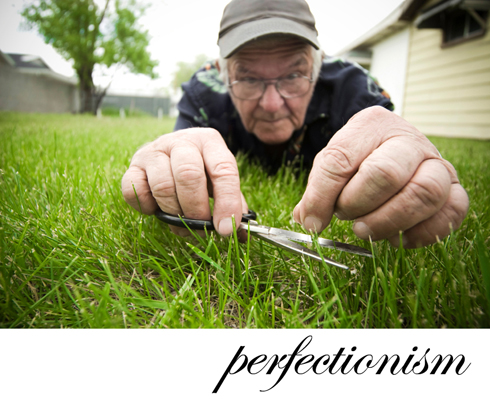
Stupid? Yep. But that was my way of coping with being a perfectionist. I couldn’t accept the possibility of getting less than a top grade so I gave myself an excuse in case I didn’t.

As I began my professional life, I hate to admit that I still had the tendency to procrastinate. But while I could get away with this in school, I quickly realized that as an attorney, it was unacceptable to deliver anything less than my best.

Losing cases was difficult for me. I often took it harder than my clients. I never did get used to it. How did I learn to cope with less than perfect results? By not focusing on the results at all, but instead, focusing on the process.

We can’t control the verdict. There are too many factors outside of our control. We can’t promise results. All we can do is put our best efforts into our work.

If you focus on the outcomes in life, you will ride an emotional roller coaster. If you focus on doing your job and giving it your best, you are successful no matter what the outcome.

I am successful today because instead of focusing on perfect results, I focus on making progress. Because I do that consistently, I have a lot of successful outcomes. When my results are less than optimum, I accept it because I wasn’t focused on the outcome, I was focused on my work.

If you are a perfectionist (or otherwise emotionally attached to outcomes), change your focus to the work in front of you. Get busy with “the next step” and do your best. When you’ve done that, focus on the step after that.

And when you’re done with a project, don’t dwell on the results, get started on the first step in the next project.

Share

A simple way to promote your blawg you’re probably not doing

Share

increase-blog-trafficDo you have a print brochure for your law practice? Most attorneys don’t. They pass out their business card with the url to their web site or blog but a business card generally doesn’t tell people what you do or the benefits you offer. People have to go the your web site to find out and too often they simply don’t.

A brochure would help. But if you don’t want to spend the time or money hiring professionals to create one, there is a simpler alternative.

Take your best and most read blog post or posts and print them. You don’t need to re-set the text so it looks like a brochure, just print out the the posts as is. Add a cover sheet on your letterhead or add a screen shot of your blog’s home page. Or just staple your business card to the front and you’re done. Instant brochure.

No, it’s not slick and polished like a “real” brochure, and that’s okay, it’s not a brochure, it’s a reprint. In truth, your reprint is more effective than a brochure because it’s not slick and it’s not a sales document, it is valuable content that prospects want to read.

Hand out your reprints when you’re you’re speaking or networking. Put some on the table at the back of the room. Put a few copies in your new client welcome kits. Ask your referral sources to put them in their waiting rooms.

You can use this idea online, too. Gather up some of your better posts and assemble them into a PDF.

One of the easiest ways to get more traffic to your blawg is to give people a taste of what they get when they visit. This is a simple and very effective way to do that.

Share

How to kill your chances of success

Share

the worst time to take a vacationThere’s a natural rhythm to building a law practice. You start out from a dead stop, try a lot of things to see what works, and you keep doing what’s working. Eventually, you have some momentum. Things start happening a bit more often. They last a bit longer. They get a little easier.

Before you know it, you’re on a roll.

The same pattern occurs throughout your career, and if you’re smart, you’ll capitalize on your momentum, pouring gasoline on the sparks and fanning the flames until you have a raging inferno of success.

Leveraging your positive results and momentum to build things bigger is not only a smart move, it is essential. How many times have you seen people you know get off to a good start in a project but fail to finish big? How many times have you seen this happen to you?

Momentum is one of the hardest things to achieve and one of the easiest things to lose. The good news is that once you have some momentum, things do get easier. But that doesn’t mean you can stop.

It’s like pushing a car from a dead stop–very difficult at first, but once it’s rolling, it doesn’t take much to keep it moving. If you stop pushing, however, the car will eventually come to a dead stop.

I read a thoughtful article this morning that makes this point in the context of taking vacations. In “The Absolute WORST Day to Take a Vacation (It’s Not What You Think!)” the author says that the worst day to take time off is just after you’ve achieved a goal. When things are starting to happen for you, you shouldn’t take a break, you should double your efforts.

It’s not that you don’t deserve a reward for your hard work. But your reward, says the author, should be your results:

For an entrepreneur (or anyone who is in charge of their own income),vacations don’t come when projects are complete. On the contrary – they should come when the projects are still in progress, but you’re tired, and need to recharge to carry the ball the rest of the way.

Give some thought to this as you plan out the coming year. I know it’s difficult to find time on your calendar for family trips, especially when you must coordinate school and work schedules. At least be aware of the rhythm of your practice and do your best to start projects after a vacation, not before.

Share