The problem with free consultations (and my offer to you)

Share

People prefer to hire lawyers they know, like, and trust. One of the best ways to get prospects to know, like, and trust you is to give them a sample of what you do.

To some extent, that’s what you do when you provide free information. Blog posts, reports, articles, seminars, and so on, give prospective clients an insight into what you have done for others, suggesting that you can do the same for them. They can see you know what you’re doing and get a sense for what it would be like to work with you. Through your words, they come to know, like, and trust you, bringing them one step closer to hiring you.

And yet, of all the people who read or listen to your information, only a small percentage actually take it upon themselves to call and book an appointment. There’s too big of a gap between “reader” and “client”. One way to bridge that gap is by offering a free consultation.

Free consultations allow you to initiate a personal relationship with a prospect and provide them with “customized” information. It’s one thing to provide generic information in your practice area, quite another to interpret that information in the context of a prospect’s particular problem. Prospects who read your information may like what you say and the stories you share but this will never take the place of actually speaking with you.

Done right, free consultations can bring in a lot of business. The problem with free consultations, especially in practice areas where they are common, is that they are usually not done right.

“Free” is one of the most powerful words in the dictionary, but just because something is free doesn’t mean anyone will want it. Many prospects today, seeing that most attorneys in your field offer free consultations, don’t see the value in yours. In fact, many prospects see no value in a consultation, believing it is just an excuse to get them into your office so you can do a sales pitch for your services. Unfortunately, for many attorneys, that’s exactly what it is.

One solution is to include a detailed description of everything the prospect gets as part of the free consultation. Tell them what they will learn, what you will explain, what you will do for them, and what you will give them (e.g., reports, checklists, case evaluation, issue summary, etc.).

Also tell them how they will benefit. Yes, you evaluate their situation and explain their options, but so what? What does that mean to them? It means they will be able to make better decisions about what to do, making it more likely that they will resolve their problem or achieve their objective. It means they will save time or money. It means they will be one step closer to eliminating their anxiety and worry and sleepless nights.

In other words, you can’t simply say the magic words “free consultation” and expect people to come running. You have to “sell” it.

Let me give you an example with my own services.

Starting today, until further notice, I’m offering free consultations for my consulting and coaching services. These will be on a first come, first served basis since I can only do so many of these and I expect to get a lot of response.

During our consultation we’ll talk about where you are and where you would like to be in your career. I’ll ask questions and I will give you my advice. I won’t mince words. I’ll tell you straight out what I think you should do. As a result, you’ll know exactly what to do to bring in more clients, increase your income, or otherwise improve your current situation.

In addition, you’ll be able to ask me questions. You can ask about marketing, cash flow, productivity, goals, or anything else that’s on your mind.

As you know, I’m not somebody who simply read a few marketing books and set up a web site. I practiced law for more than twenty years and learned (the hard way) what it takes to bring in good, paying clients. I know what works and what doesn’t, what works quickly and what doesn’t, because I’ve tried it all. I’ve been in your shoes. I know what it’s like to struggle to make rent. I know what it’s like to question whether you made the right choice of career or specialty or market. I also know what it’s like when the business is coming in faster than you can handle.

I have seventeen years experience consulting with attorneys and helping them to get more clients and increase their income. But then if you’re a regular reader of this blog, you know most of this. That’s why you read it.

These consultations are free and there is no obligation to you whatsoever. Sure, I hope that after the consultation you will want to hire me or buy something from me, but that’s not important. What’s important is that I give you so much value during our consultation, so many ideas for taking your practice to a much higher level, that you can’t wait to get started. I know that if I deliver that to you, we’ll do business some day.

Because I expect to get a lot of response to this offer, I must limit these consultations to 15 minutes. Therefore, after we schedule your consultation, please email me as much information as possible about your current situation. Tell me your problems, obstacles, questions and objectives, so that when we talk, we can get right to the solutions.

Fair enough?

If you’re interested in setting up a consultation, please email info[at]attorneymarketing.com and put “consultation 15” in the subject. Give me three dates and times when you will be available for 15 minutes and the best telephone number to reach you. (I’m in California, so mind the time zone.) I’ll email back and we’ll confirm the date and time.

I look forward to helping you make 2012 your best year ever.

Share

How to create a more successful law practice

Share

I read another thoughtful post by Leo Babauta on the Zen Habits blog about the subject of practice. No, he wasn’t writing about a law practice, but I thought his message of “practicing” to effect improvement applied as much to a law practice as to anything else. Plus, I like the play on words.

We are what we repeatedly do. We are the sum of our habits. If we want to change who we are, we have to change what we do.

Change begins with awareness. If you didn’t say “thank you” to the new client who just hired you (you’d be surprised at how many attorneys don’t), reading this sentence made you aware that you didn’t and also aware of how important it is. (Your mother will tell you, it’s one of the most important things you can do.) If you usually say thank you, but for some reason didn’t do it last time, there is room for improvement. The standard of excellence isn’t saying thank you most of the time, but every time.

Now that you are aware, make a decision to change. Then, practice your new habit. With something as simple as saying thank you, you might only need to be reminded. Write it down on your intake sheet, use a post it note, put it on your calendar, whatever you need to do to remember to always say thank you.

Also be aware of what happens when you get it right. Watch your new client’s face as you look him in the eye, shake his hand, and sincerely tell him how much you appreciate having him as a client. Tell him you’ll take good care of him. Let the handshake linger a few seconds longer. Give him your full attention. Say thank you, and mean it. You’ll see some of the tension leave his face as he comes to realize that you really do care.

Your law practice is a collection of habits. What you (and your staff) regularly do and how well you do it defines you, distinguishes you from other lawyers, and plays a big role in determining your success. There are big habits and many small ones and they all matter.

Share

A habit that will make you rich (hint: it’s all in your mind)

Share

One of the “Eight Secrets to Getting More Done in 2012,” in this Forbes magazine article struck a nerve with me because it is something I have struggled with. If you have ever been accused of being “overly analytical,” “a perfectionist,” a “procrastinator,” or just somebody who has trouble making up their mind, we’re bred from the same stock.

Yes, being an attorney means being careful, not jumping to conclusions, and not making rash decisions. We carefully weigh the options and we go out of our way to avoid risk. It goes with the job description.

It’s also why attorneys usually make poor business people. Entrepreneurs see a vision of success and act on it; lawyers see what could wrong and either say no or mull it over so long the opportunity passes them by.

But according to Napoleon Hill, author of Think and Grow Rich, the ability to make quick decisions is the hallmark of rich people:

Analysis of several hundred people who had accumulated fortunes well beyond the million dollar mark, disclosed the fact that every one of them had the habit of reaching decisions promptly, and changing these decisions slowly, if and when they were changed at all. People who fail to accumulate money, without exception, have the habit of reaching decisions, if at all, very slowly, and of changing these decisions quickly and often.

Marty Zwilling, founder and CEO of Startup Professionals understands this. It was his contribution to the Forbes article that caught my eye:

My key to productivity is simply “make a decision.” Even a bad decision is recoverable, and better than no decision, since it gets the issue off your plate and moving. Making no decision bottlenecks your work, and causes things to happen to you, rather than by you.

But if the ability to make decisions quickly is a habit of the rich and attorneys are prone to doing the opposite, why are there so many rich attorneys?

Two reasons, I think. First, we’re around a lot of successful people and get in front of a lot of good opportunities. The odds are in our favor that we will be “in the right place at the right time”. Second, attorneys are intelligent people and tend to make “good decisions,” albeit not quickly. If we could combine the two and make “good decisions quickly,” I think there would be many more rich lawyers.

Fortunately, making decisions quickly is a habit and habits can be developed. You do it once, the world doesn’t end, you do it again.

Wash, rinse, repeat.

Start with little decisions, “which movie to see,” or “which topic to write about today.” Give yourself five minutes to decide. Use a timer. Use a screen saver message or post-it to remind you to “Decide Now!” And do it every day.

If you mindfully make quick decisions every day, making quick decisions will soon become a habit. Eventually, you’ll be able to make quick decisions about important matters and that’s when you will see more significant results.

But don’t forget the other side of the equation. Once you’ve decided, you must stick with your decision. Practice not changing your mind. Yes, you’ll make mistakes, but as Zwilling says, “even a bad decision is recoverable”. Isn’t that why God invented E and O coverage?

Share

My Wish for You in 2012: A Plan for Building Your Law Practice

Share

business development plan for attorney lawyerAre you hoping things will get better in 2012? A lot of people are, but unfortunately, “hope is not a strategy“.

If you want things to get better, you need to make them better. But how?

Don’t start with technique, start with strategy–a plan. What do you want to happen, and why? What will do you do to make it happen? Is this really something you want to do?

Too often, people grab hold of a technique they hear about and run with it. They spend time and money doing the requisite activities, without considering why they are doing it. They install an expensive motor on their row boat hoping it will get them to their destination faster, but they never look at a map.

Techniques are important. Using the right tools for the job, execution, timing–can make a big difference in your results. But without the right strategy, the latest techniques won’t help you to get where you want to go.

What are you good at and enjoy? Writing? Speaking? Networking? Technology? Make it the core of your business building strategy.

Your strategy doesn’t have to be elaborate. In fact, the simpler it is the better. But simple is not synonymous with small. Your plan should inspire you to accomplish big things. After all, the goal isn’t merely to survive, it is to thrive, and you cannot do that by dabbling.

I’ve seen great practices built by using only one or two techniques. Once you know where you want to go and you have a plan to get there, you don’t need dozens of techniques.

Without the right strategy, no technique is good enough, no matter how much it costs or how hard you work at it. With the right strategy, almost any technique will do.

Share

Mark Zuckerberg’s advice for success in business

Share

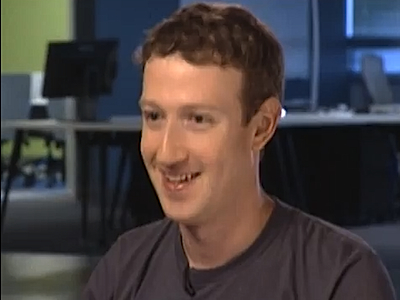
mark-zuckerberg-on-charlie-roseMark Zuckerberg was interviewed recently by Charlie Rose. Mashable published twelve quotes from that interview.

I clicked through the quotes in the slide show and didn’t think much of them. Perhaps they lost something outside the context of the actual interview.

But then I came back to one of the quotes, one that at first blush, seemed not to say much at all. The quote I came back to was Zuckerberg speaking about business:

“I think a simple rule of business is, if you do the things that are easier first, then you can actually make a lot of progress.”

It seems simplistic, doesn’t it? “Start with the easy things.” But it is truly profound.

Many people who start a business project, myself included, tend to focus on the hardest parts first. My thinking has been, “I can always do the easy things, I need to conquer the toughest challenges first because if I can’t lick those, this project will never get off the ground.”

How about you? Do you start with the easy things or, like me, do you first jump into the deep end of the pool?

Perhaps we equate “easy” with “having less value,” but in the practical sense, that isn’t true. The things we can do without a lot of thought or effort are often of greater value because they allow us to get started and getting started is the most important part.

Most business projects never see completion because they never get started. They remain ideas, Someday/Maybes, wishes and dreams.

How many projects have you conceived in the shower or while out for a drive that never got past the idea stage? In the light of day, when you thought about those ideas, you saw how difficult they would be. “I can’t do that. I don’t have time to do that. I don’t have the money to do that. Maybe some day.”

Perhaps you did get started, but you started on the difficult things first and saw first hand the immensity of the challenge. Now you know you can’t do this. Maybe some day.

What if you did the easy things first? What would happen?

You would learn things you need to know. Meet people who can help you. Gain confidence. And momentum.

If Mark Zuckerberg had thought about Facebook as anything more than what it was when he started, a little dorm room project, he may never have started. It was easy for him in the beginning, and fun. The hard parts came later after he was committed.

The most important part of any project is getting started.

Start with easy.

Share