 Let’s be honest, most attorneys don’t like marketing. Or so they say.
“I didn’t go to law school to be a salesman,” they’ll say, or, “I’m good at what I do, I shouldn’t have to promote myself.”
I understand how they feel.
And to some extent, their “good work” will serve as a magnet for referrals or repeat business. But to categorically dismiss marketing of any kind is foolhardy.
Advertising isn’t so bad, is it? Even Abe Lincoln advertised:
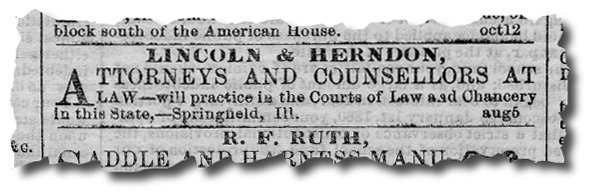
Do you have a web site? Guess what? You’re advertising. Same goes for a directory listing.
Do you ever answer the question, “What do you do for a living?” Well, whatever you say in response is selling.
In fact, every letter we send, every conversation we have, every article, blog post, or speech, is an opportunity not just to deliver words and ideas but to sell the reader or listener on us and our ability to deliver benefits.
When a client signs your retainer and gives you a check, a sale has taken place.
The sales aspects of our communications are more subtle than an informercial pitch, but it’s sales, nevertheless.
And I’m not even going to mention that negotiating, demand letters, motions, and closing arguments are sales of the highest order.
Lawyers sell. (But that doesn’t make us sales people.)
Lawyers “do” marketing. Marketing is defined as everything we do to get and keep clients.
Sales, marketing, public relations, publicity. . . what’s the difference?
I’ve found no better explanation than this one:
If the circus is coming to town and you paint a sign saying, “Circus is coming to Fairgrounds Sunday,†that’s Advertising.
If you put the sign on the back of an elephant and walk him through town, that’s a Promotion.
If the elephant walks through the Mayor’s flower bed, that’s Publicity.
If you can get the Mayor to laugh about it, that’s Public Relations.
If the town’s citizens go the circus, you show them the many entertainment booths, explain how much fun they’ll have spending money at the booths, answer their questions and ultimately, they spend a lot at the circus, that’s sales.
– M Booth & Associates