Archives for November 2011

Write or Die: A Simple Solution to Writers’ Block

Share

cure for writers blockI’m not sure I believe in writers’ block. I believe in “no talent” and “no ideas” but writers block? You don’t have trouble speaking, do you? I don’t mean public speaking, I mean vocalizing your thoughts out loud to another human being or into a microphone.

No such thing as “talkers’ block” so why “writers’ block”?

And yet, people who can write, don’t.

It might be perfectionism. I lean in that direction. You don’t want to show anyone your writing until it’s perfect and it never is. But, if writing is important to you, you get over this.

It’s often a lack of time. Attorneys are busy people. All day you’re on the run, and at the end of the day, you’re tired. Weekends, you have chores and you need some family time. You want to write, you know you can write, but days and weeks go by and it doesn’t get done.

You need a deadline.

When you have a deadline, it is amazing how much you can get done. You need to get a pleading filed by a certain date, you do it. You promised an editor you’d finish an article, you do. A deadline holds you accountable. Just ask the IRS.

An example of what can be done when there is a deadline is National Novel Writing Month, aka, “NaNoWriMo”. Every November, participants from around the world commit to writing a 50,000 word novel in 30 days. In case you don’t know, writing 1,667 words a day every day for a month is a tall order; writing 1,667 novel-worthy words is simply astounding.

And yet each year, thousands finish a 50,000 word novel within the 30 days.

The 30 day deadline imposes a daily word quota. Participants use their word processor or text writing app to make sure they write enough words each day so they don’t fall behind. You could do the same thing. Pick a number of words you will write each day and don’t stop writing until you do.

Another technique writers use is to set a timer for ten or twenty minutes and write without stopping until the timer sounds. Then, they are done for the day or if they haven’t met their word quota, they go for another ten or twenty minutes.

This is the Pomodoro technique, which can be used for any kind of task. The idea is that you can do anything for ten minutes, no matter how much you might not want to or how busy you might be. Many books have been written in blocks of ten or twenty minutes a day.

I’ve written about the Pomodoro technique before, and recommended Focus Booster, an app I sometimes use when I need to concentrate.

In reading about NaNoWriMo, I learned about Write or Die, a timer app for writers. It allows you to set a word quota and a time quota. It also allows you to impose a penalty. If you don’t meet your quota or you stop writing before the time limit, the app will play a loud and annoying sound. Weird, but it works.

You can configure the app for different word counts, times, and penalties. In one setting, if you don’t make your quota, whatever you have written up to that point gets deleted. How’s that for accountability!

The app is free and there are paid desktop versions. If you need some help sticking to a writing schedule, Write or Die could be for you. Or, you could have your mother in law call you once a day to ask if you got your quota done.


Share

The Best Ways to Engage Clients on Facebook and Twitter are Also the Simplest

Share

Get More Facebook LikesSocial media marketing is networking online. Having fans and followers without engaging them would be like going to a networking event and not talking to anyone.

What do you do when you don’t know what to post or you don’t have time to converse with your fans and followers?

A recent survey by Roost, a social marketing platform, has the answer. They evaluated more than 10,000 Facebook and Twitter posts by small businesses from over 50 industries and determined which posts yield the highest levels of interaction. It turns out the activities with the highest levels of engagement happen to be the simplest and most accessible.

According to blogger TJ McCue who wrote about the survey, “the best way to achieve Likes is through photo posts, quotes and status updates, with photos providing 50 percent more impressions on average than any other post type, and quotes providing 22 percent more interactions when compared to all post types.”

That’s good news. Photos and quotes are already streaming through your feed. All you need to do is is share the ones you like.

More good news: links are 87 percent more likely to be shared than any other post type. So, as you go about your daily reading of blogs and articles, find the ones you like and share them.

The bottom line is that you don’t need to spend a lot of time engaging your followers, nor do you need to have original content, although in my opinion that can only help. Unless, of course, you want to share all 187 photos of your family trip to Disneyland.

Social media is networking online and sharing of content is part of the conversation. But just because it’s easy to share everything doesn’t mean you should. Share content that you like, but even more, share content the people who follow you will Like (with a capital “L”).

Share

How to get free content for your blog

Share

guest bloggingSo you have a blog (or want to start one) and you need content. Your time is limited. What can you do?

First, don’t assume you need to spend hours writing your posts. As I’ve written before, a post can be a few paragraphs that take just a few minutes to write. It can be as simple as taking something you read online and adding your comments. Tell why you agree, or disagree, link to another post that provides a different viewpoint or additional information, or share a story from your practice that illustrates the points in the article.

For longer posts, you have several alternatives:

  • Re-purpose something else you wrote (newsletter, article, speech, brief, report, interview, etc.)
  • Hire a freelancer (www.elance.com, www.guru.com, www.craigslist.com, etc.)
  • Hire a student (e.g., an English or Journalism major; they will often work for free for the experience or writing credits)
  • Have someone in your office write it (or the first draft)

One of the best ways to get original content for your blog is through guest posts. Someone else writes the post in return for a byline and link to their blog.

The benefits to you are

  • You get content you don’t have to research or write, from experts in their field
  • You get traffic to your blog and, possibly, opt-ins to your list. Presumably, the writer will tell his or her readers about the guest post and some of them will come to see it.
  • Your readers get valuable content and they appreciate you for providing it.

The benefits to the guest blogger are

  • They get to demonstrate their expertise to your readers and get traffic to their blog
  • They get additional writing credit they can use with other blogs
  • Their readers see them being endorsed by you, elevating their status

Now, what’s good for the goose is good for the gander. If guest posts are a good way to get exposure and traffic, why not offer to do some guest posting yourself? Find blogs that write for your target market and offer to do a guest post. Here are 21 tips for landing guest posts.

Perhaps the biggest benefit of guest posts is that they allow both parties to make a new connection. This can lead to referrals, introductions, advice, interviews, endorsements, networking and cross marketing opportunities.

Start looking for blogs that reach your target market. Invite them to write a guest post for your blog or offer to do the same for theirs.

Share

Slowing down to speed up

Share

Stop running. Yes, I know you have to get to court, crank out a new agreement, and meet with your new client. I know you’re busy and this is how you earn your living. I know that if you don’t do the work you won’t get paid.

Slow down anyway. Better yet, come to a complete stop.

At least for a few hours.

Slowing down allows you to refine what you’re doing so you can do it better, and faster. Just as a race car needs pit stops, so do humans. By taking a break periodically, we can ensure that everything is working properly and that we are on course and on pace. Taking a break allows us to recharge our energy and clarify our focus. It allows us to go faster, assured that we are going in the right direction.

Take some time to evaluate what you are doing and the results you are getting. Are things moving in the direction you want? Is there anything you could do better? What’s working well that could be expanded?

Take some time to look at your calendar. How are you spending your time? What else might you do? Is there something you are doing that you don’t really need to do? Is there something that takes you two hours that could be done in one?

Take some time to rest and reflect on the bigger picture. What big ideas could you start working on that might help you take a quantum leap? Where do you want to be five years from today and what could you start doing today to help you get there?

Take some time to get rid of clutter and distractions. If it doesn’t serve you in some way, eliminate it. Simplify your life so you can focus on what is important and valuable.

Take some time to read things you don’t usually read. Look for ideas and inspiration. Have some fun. Goof off. Go to the movies in the middle of the day. Take your best friend for a long lunch.

And take some time to give thanks for all that you have. When you appreciate the goodness in your life, you attract more of it.

Share

Mark Zuckerberg’s advice for success in business

Share

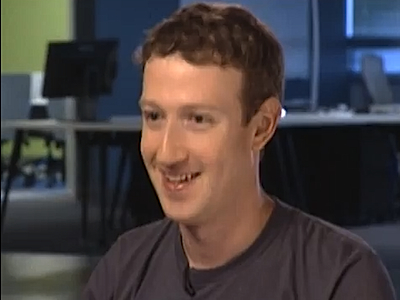
mark-zuckerberg-on-charlie-roseMark Zuckerberg was interviewed recently by Charlie Rose. Mashable published twelve quotes from that interview.

I clicked through the quotes in the slide show and didn’t think much of them. Perhaps they lost something outside the context of the actual interview.

But then I came back to one of the quotes, one that at first blush, seemed not to say much at all. The quote I came back to was Zuckerberg speaking about business:

“I think a simple rule of business is, if you do the things that are easier first, then you can actually make a lot of progress.”

It seems simplistic, doesn’t it? “Start with the easy things.” But it is truly profound.

Many people who start a business project, myself included, tend to focus on the hardest parts first. My thinking has been, “I can always do the easy things, I need to conquer the toughest challenges first because if I can’t lick those, this project will never get off the ground.”

How about you? Do you start with the easy things or, like me, do you first jump into the deep end of the pool?

Perhaps we equate “easy” with “having less value,” but in the practical sense, that isn’t true. The things we can do without a lot of thought or effort are often of greater value because they allow us to get started and getting started is the most important part.

Most business projects never see completion because they never get started. They remain ideas, Someday/Maybes, wishes and dreams.

How many projects have you conceived in the shower or while out for a drive that never got past the idea stage? In the light of day, when you thought about those ideas, you saw how difficult they would be. “I can’t do that. I don’t have time to do that. I don’t have the money to do that. Maybe some day.”

Perhaps you did get started, but you started on the difficult things first and saw first hand the immensity of the challenge. Now you know you can’t do this. Maybe some day.

What if you did the easy things first? What would happen?

You would learn things you need to know. Meet people who can help you. Gain confidence. And momentum.

If Mark Zuckerberg had thought about Facebook as anything more than what it was when he started, a little dorm room project, he may never have started. It was easy for him in the beginning, and fun. The hard parts came later after he was committed.

The most important part of any project is getting started.

Start with easy.

Share

Do you have too many clients?

Share

Attorneys with too many clients to serveMost attorneys say they want to get more clients but if they’re not ready for more clients, it can actually cost them.

If you can’t serve your clients, they aren’t going to stay. You must have the staff and other resources in place to do the legal work and support functions or new clients will leave as quickly as they came.

What about “one time” clients? You’re going to handle their divorce or bankruptcy or injury claim, do their estate plan or handle their closing, and you’ll probably never see them again. Can you have too many of them?

Yes. These clients may not themselves return but if you treat them well, they can and will send you referrals. If you don’t, not only will they not send you new business, they’ll tell everyone they know that you are sloppy or slow and did not do a good job for them.

Taking on too many clients is especially a problem for firms that grow quickly. Legal services do not scale in the same way selling widgets does. We are in a personal service business and we need people to provide that service. It takes time to find the right people, hire and train them. Unbridled growth can cause serious financial problems, inordinate stress, and an increased risk of malpractice for the firm that is unprepared.

Rapid law firm growth is not uncommon. A dramatic upsurge in “intakes” can occur for a variety of reasons. Every firm needs to have a plan in place now, before that growth occurs.

If your practice tripled in the next 90 days, where will you go to find the personnel, the technology, and the other resources you need to accommodate that growth?

Will you partner with another firm? Turn away the smaller business to handle the bigger cases or clients? Will you hire a head hunting firm or consultant?

Start thinking about these things right now, and not just because you need to be prepared. Think about these things because in doing so, you will send a message to your subconscious mind that you are ready for and expecting that growth. You will then start seeing things you need to see and attracting the information and the contacts you need to make that growth a reality.

Too many clients? A nice problem when you’re ready for it.

Share

Are you getting the RIGHT things done?

Share

three most important tasks for todayPeter Drucker once said, “There is nothing so useless as doing efficiently that which should not be done at all.” Far more important than “doing things right,” he said, is “doing the right things”.

Every day, I review my task lists and choose the three “most important tasks” for the day. My most important tasks are those which advance my most important objectives. My “MITs” go at the top of my list and I make an effort to do them before I do anything else. If I get these three things done, I consider it a good day.

Three is a good number, but sometimes there are only two. There are days when a fourth MIT slips through and makes it to my list, but I try to focus on no more than three.

Three MITs keeps me from getting overwhelmed by a longer list and gives me a sense of accomplishment. When I get my three MITs done, I then take care of less important tasks. Or, if it’s early in the day and I feel like it, I might add another MIT to the list.

At times, you may find it difficult to choose three MITs. You may have ten things that MUST get done today. No problem. Of the ten, which three are the MOST IMPORTANT? Make those your MITs and do them first.

Each day, you will have MITs and you will have other tasks. The other tasks may be important and need to be done. They may even be urgent. I’m not telling you to ignore these other tasks. Do them, but whenever possible, do them after you do your MITs.

The GTD methodology helps me to get things done. A daily list of MITs helps me to get the right things done.

Share

Using Followupthen.com email reminder service (with or without Evernote)

Share

Follow up then and evernoteAs you know, I use Evernote for everything: notes, writing, web clips, and task and project management. (Read my posts about how I use Evernote).

A missing element in using Evernote for task management is calendar integration. If I want to see a note on a certain day in the future, I have to manually put a reminder on my calendar, with a link to that note. I calendar “ticklers” to remind me of all kinds of things: reviewing a task, starting a task, calls–anything I need to do or review at a future date.

There is only one issue with this, but one I can live with until something better comes along: The note links that I paste into my Google Calendar aren’t clickable. To find the linked note, I copy and paste the link into a new browser window, hit enter, and the note is launched in my Windows desktop client.

Followupthen.com is an email reminder service that can be used to send reminders to yourself or anyone else (e.g., employees, partners, clients), at pre-set days and times. For example, you can use the service to send yourself an email reminder to call a client three days from today or to begin working on a brief three hours from now.

I’ve tried the followupthen.com service and I like it. It’s easy to use and requires no registration. Simply send an email (To, CC, or BCC) to (time interval) [@] followupthen.com to schedule a future email. The service is free and they have an upgraded version with additional features.

You don’t have to use Evernote to benefit from the Followupthen.com service, but you might want to. Fellow attorney and Evernote lover, Daniel Gold, author of a new ebook on using Evernote for GTD, just posted a video showing how he uses the Evernote Note Links feature with Followupthen.com to remind him of his Evernote tasks:

[mc src=”http://www.youtube.com/watch?v=VAsKUFHlA60″ type=”youtube”]Evernote and followupthen.com reminders[/mc]

Followupthen.com may sound like the ideal solution to Evernote’s lack of calendar integration, but there are two issues that preclude me from using it exclusively:

  1. The Evernote note link that is returned to you in the reminder email isn’t clickable (at least not in my chrome browser). I still have to copy and paste it as I do with links in my calendar. This may not be the case if you use Outlook or another email client, but I still have the extra step I have when using gCal. Of course you can use the reminder without note links but then, once reminded, you have to search to find the note in Evernote.
  2. Email isn’t as reliable as a calendar. If an email doesn’t arrive, or you don’t see it when it arrives, you won’t get another reminder. The corresponding task that lies buried in Evernote (or whatever you are using) might forever be forgotten. On my calendar, when I do my weekly review, I can see all of the tasks I did and did not do that week. To re-schedule a task, all I need to do (on gCal) is slide it to another day.

I recommend Followupthen.com but I don’t see it as the best solution for tracking reminders. I can see using it for reminders in addition to using a calendar or other application, but not as a replacement.

Evernote said they are going to release a “due date” field, at which point we will be able to use Evernote itself or other third party applications for reminders.

If you use GTD and Evernote (or want to) and you want to know how to use the two together, Dan’s ebook is only $5. (My review). Dan is currently running a promotion and will be giving away one year of Evernote Premium.

If you are new to Evernote and want to get up to speed quickly, Brett Kelly’s “Evernote Essentials” ebook is highly recommended.

What are your thoughts on Followupthen.com and Evernote reminders?

Share

The one competitor no attorney can afford to ignore

Share

competition for legal servicesMarketing legal services can be cut throat. And yet I often write that while attorneys should keep an eye on their competition, they should not fear them. Competition makes us better lawyers. It educates and expands the market for our services. And it provides us with a way to convince prospects to choose us by showing them how we are different or better.

But there is one competitor that no attorney can afford to ignore.

This competitor is stealthy. If you aren’t careful, he will steal clients from under your nose and you will never know it. There is no competition more powerful, or more deadly than this one, and you need to be prepared.

Who is he? He goes by several names: apathy, indecision, and fear.

Your biggest competition isn’t the other attorneys in your market. Your prospects have another option, as Seth Godin reminds us: the option of doing nothing.

You may do a good job of showing prospects why they should choose you instead of any other attorney, but you must first show them why they need to hire any attorney. If they don’t see the need or their fears preclude them from making a decision, you’ve lost the client, just as surely as you would had he hired the guy down the street.

The good news is that you can defeat this competitor. Make sure your prospects understand the risks of doing nothing and the benefits for making the right decision. Tell them the facts and share the stories.

Once they know why they need to hire an attorney and are persuaded to do so, then show them why the attorney they hire should be you.

Share